
BLOG

- HOME
- BLOG
- Related Knowledge
- How to install construction fencing in compliance with regulations? Understand key specifications and types of fencing in 3 minutes!
How to install construction fencing in compliance with regulations? Understand key specifications and types of fencing in 3 minutes!
May 23, 2025
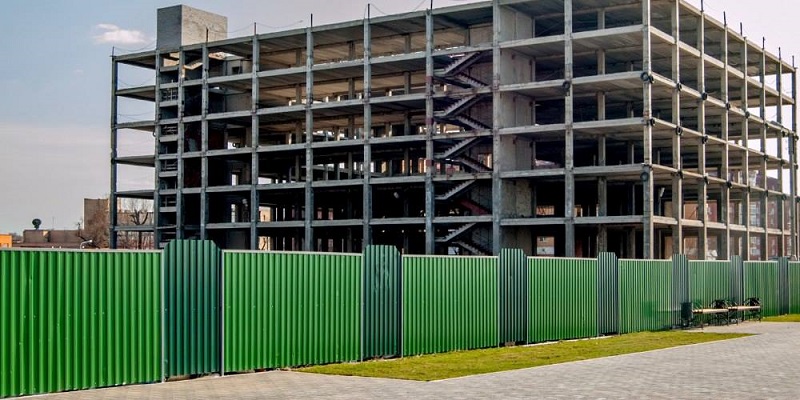
When a construction site begins work, the fencing is the first facility to appear on site. At various construction sites, temporary fencing is not just a basic provision but also a key factor in ensuring public safety and maintaining site order. Fencing effectively delineates construction zones, maintains site organization, and directly impacts personnel safety, traffic guidance, and construction privacy. Without proper fencing, accidents are more likely to occur, and crews may also face legal penalties. Next, we will use the simplest approach to quickly help you understand the types of construction fencing and how pricing works, enabling you to grasp the key points of selection and installation in a short time!
What is Construction Fencing? A Detailed Look at Common Structures
Construction fencing is a temporary facility used to delineate construction areas, enhance safety, and improve environmental management efficiency. Its basic structure includes four main components: panels, posts, anti-overflow bases, and footings. Fencing panels are typically made of steel corrugated sheets over 1.2mm thick, grooved aluminum panels, or steel plates, offering strong wind resistance and effective shielding. Posts are commonly made of steel pipes or angle steel, supporting the overall structure. Anti-overflow bases prevent wastewater from spilling outside the site and are usually concrete blocks placed under the fence. Footings are made of concrete bases or anchored posts to enhance stability while also preventing overflow. Additionally, high-quality fencing has multiple functions, such as preventing foreign objects from entering the site, reducing noise and dust dispersion, and maintaining a clean and safe surrounding environment. Depending on construction needs, one can choose Type A, B, or C fencing to ensure compliance with regulations while meeting practical requirements.
〈Further Reading: How to Choose an Anti-Overflow Base? Types, Precautions, and Vendor Selection Explained!〉
Is Construction Fencing Important? What Happens if You Don’t Use It?
Construction fencing plays a crucial role in various engineering projects and is by no means optional. Its primary function is to ensure personnel and site safety, effectively preventing unauthorized individuals from entering the construction area and reducing the risk of accidents. According to the "Construction Safety and Health Facilities Standards" and the "Air Pollution Control Measures for Construction Projects," fencing is mandatory for construction projects, and failure to install it may violate regulations and incur penalties. Beyond safety, fencing also protects site equipment and materials, lowering the risk of theft or damage, and keeps the construction area organized, clearly defining work zones to improve efficiency. Many types of fencing also provide dust and sound insulation, minimizing disturbances to the surrounding environment and avoiding complaints from the public. Without fencing, construction quality may be compromised, and hazards like falling objects or trench collapses pose potential threats to both the site and nearby pedestrians.
What Are the Types of Construction Fencing? A Quick Guide to 3 Main Types
Different types of fencing vary in materials, structure, and appearance, but all aim to enhance site safety and visibility. Especially in urban areas or large-scale projects, choosing the correct type of fencing not only reduces risk but also helps build a positive corporate image. Below are the three most common types of fencing and their functions, allowing you to select according to construction environment and safety requirements.
Type 1 Construction Fencing – Type A
Type A fencing is a fully enclosed fence, commonly 1.8 meters or 2.4 meters in height. It features a closed structure that fully blocks visibility and dust. Type A fences are mainly constructed using corrugated iron sheets and include anti-overflow bases and warning lights to prevent external interference, maintain site cleanliness, and protect construction privacy. With a sturdy structure and high weather resistance, Type A fencing is mainly used in building sites, long-term large-scale projects, or any construction site with high safety and privacy requirements.
Type 2 Construction Fencing – Type B
Type B fencing is a semi-enclosed, movable structure, offering advantages of portability and quick assembly. Its standard height is approximately 1.8 meters, with a design featuring a wire mesh upper section and galvanized steel lower section. Each Type B fence set includes the panel itself and a solid stone base for support and stabilization. Combining ventilation and partial visual shielding, it effectively maintains safety while allowing visibility around the site, commonly used for temporary roadwork or similar projects.
Type 3 Construction Fencing – Type C
Type C fencing is also a semi-enclosed fence, with a standard height of 1.2 meters. Its design is similar to Type B but offers lower shielding, mainly serving as a warning or alert. It is suitable for small construction areas or short-duration projects. Quick to install and easy to dismantle, it cannot fully block foreign objects or people but provides basic separation and safety indication without obstructing surrounding traffic.
What Are the Typical Prices for Construction Fencing?
Common construction fencing is divided into Type A, B, and C, with price differences reflecting materials, structure, and functionality. Type A fencing is fully enclosed, costing around $850–$3,000 per meter, depending on material quality, paint type, and decorative additions. Type A with an anti-overflow base costs about $850–$1,000 per meter. Adding anti-rust paint increases the price to approximately $900–$1,200 per meter, and decorative finishes can raise the price up to $3,000 per meter. Type B and C fences are simpler in structure and priced per set: Type B costs about $700–$900 per set, and Type C costs about $500–$700 per set. With no optional painting or decoration, these are lower-cost options suitable for budget-conscious or lighter-use sites.
Comparison Table of 3 Common Construction Fencing Prices
(Based on Material Costs)
|
Type A Fence |
Type B Fence |
Type C Fence |
|
|---|---|---|---|
|
Price Range |
$850~$3,000/meter |
$700~$900/set |
$500~$700/set |
|
With Anti-Overflow Base |
$850~$1,000/meter |
× |
× |
|
With Anti-Rust Paint |
~$900~$1,200/meter |
× |
× |
|
With Decorative Finish |
~$1,200~$3,000/meter |
× |
× |
Common Questions About Construction Fencing
During various construction projects, fencing serves as the first line of site safety. However, many people are often unsure about installation costs, durability, and setup time during the planning stage. The following section provides simple explanations of common construction fencing questions to help you plan more efficiently.
What is the Installation Fee for Construction Fencing?
The installation fee is separate from the price of the fence itself. Contractors typically quote equipment and labor costs separately. Installation fees vary depending on methods, calculated either per piece or per meter, allowing flexible adjustment according to project size.
Is Construction Fencing Sturdy and Durable?
Standard construction fencing has good basic durability, but extreme weather such as typhoons or strong winds can cause loosening, deformation, or collapse. Reinforcements may be needed depending on site conditions.
What if Construction Fencing Gets Damaged?
If fencing is damaged, partial reinforcement can be applied, such as adding support structures on the windward side or using concrete bases to enhance stability, ensuring safety and prolonging service life.
How Long Does It Take to Set Up Construction Fencing?
Setup time depends on size, length, materials, methods, and worker experience. Small fences can be completed in a few hours to one day. Type B or C fences typically take a few days to a week, while large Type A site fences may take several weeks to complete.
Can Construction Fencing Be Customized?
Fencing is subject to regulations; dimensions, materials, and installation methods must comply with rules and cannot be freely changed. However, within legal limits, aesthetic options such as painting, advertising banners, or greenery can be added to enhance appearance and visual effect while maintaining functionality.
Conclusion
Understanding fencing types and installation standards not only enhances site safety but also saves management costs and construction time. Choosing the appropriate fence according to project requirements is key to smooth construction. If you are looking for a fence solution that combines safety and durability, Weiden Engineering Co., Ltd. has extensive experience and a professional team to provide complete planning and reliable construction quality, making them a trusted partner for all types of projects. For inquiries, please contact us!
Looking for a Construction Fencing Supplier? Click Here for 【Free Consultation & Planning】

Article Classification
Recent Articles
- What does interior decoration include? A must-read guide before interior renovation!
- How to Build Cleanroom Partitions? Cold Storage Panel Experts Guide You Through Cleanrooms
- How to renovate a bathroom? Learn about bathroom renovation projects, costs, and precautions in 5 minutes!
- How to install construction fencing in compliance with regulations? Understand key specifications and types of fencing in 3 minutes!
- What is a modular house? We'll explain its 5 major advantages and different types!