
BLOG

- HOME
- BLOG
- Related Knowledge
- What is a modular house? We'll explain its 5 major advantages and different types!
What is a modular house? We'll explain its 5 major advantages and different types!
Nov 12, 2024
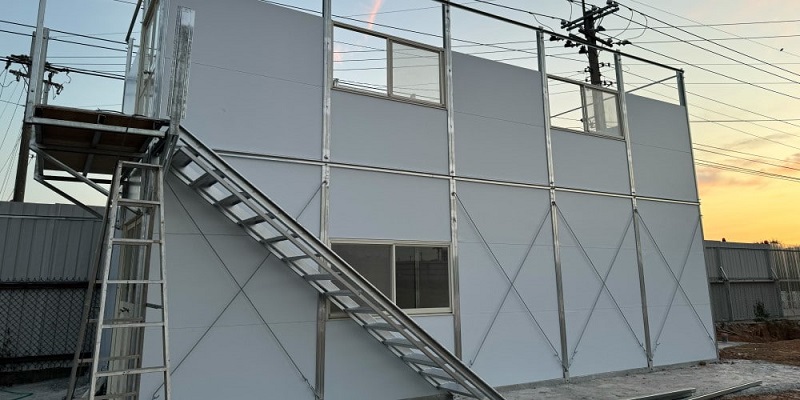
Many people dream of owning a small yet comfortable dwelling, but if the budget is limited or there is an urgent need to move in early, traditional self-build methods might extend the waiting time. Aside from conventional houses, modular homes are now an option on the market. But do you know what a modular home is? Next, let us explore the advantages, disadvantages, and important considerations for modular homes to help you find the most suitable recommendation!
What is a Modular Home?
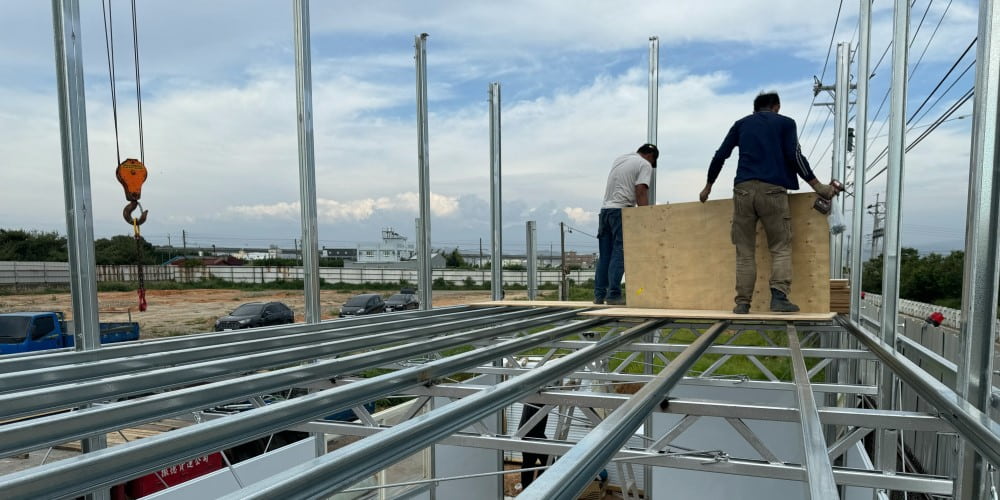
Unlike traditional construction, which requires starting from the foundation and can take over a year to build, modular home manufacturers first produce various house components in a factory. These components are then transported to the construction site for rapid assembly. Since the house is primarily produced in the factory, this effectively shortens the on-site construction time and reduces weather-related risks during construction. This not only improves construction efficiency but also maintains consistency in quality control, making it an ideal choice for modern people seeking quick occupancy.
What are the Types and Use Cases for Modular Homes?
Below provides various recommended types of modular homes. Besides the well-known construction site modular homes, there are other suitable use cases for homes and vacations, helping you find the most suitable ideal option!
Recommended Modular Home Type 1: Single-Story
Single-story modular homes are suitable for construction site dormitories, temporary offices, classrooms, or homes that do not require multiple floors. Their frame structure typically uses light steel framing, with sandwich panels or steel plates for walls. The frame connection method can be decided by the construction company, such as "mantou" (corner components) or welding techniques. Material selection can be discussed with the construction company, but beware that low-cost materials may affect subsequent maintenance and durability.
〈Further Reading: What are the Methods for Office Partitioning? Complete Guide to Interior Partitioning Comparison〉
Recommended Modular Home Type 2: Double-Story
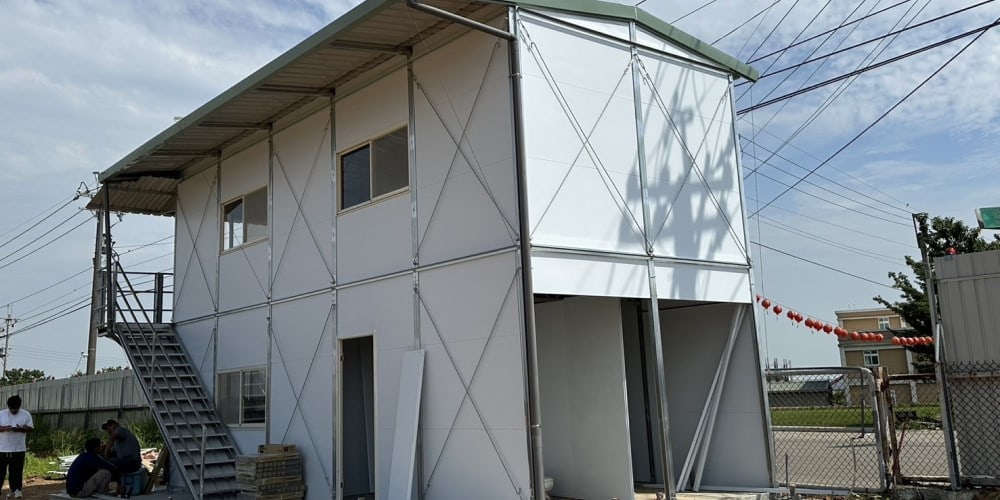
Double-story modular homes are two stories high and suitable for various applications, such as classrooms, vacation cabins, reception centers, and B&Bs. They use light steel framing for the structure, paired with sandwich panels or steel plates for wall materials, which not only increases building stability but also allows for flexible space arrangement. Furthermore, the double-story structure provides more usable space than single-story, while retaining the advantages of fast construction and short building periods of modular homes.
Recommended Modular Home Type 3: Triple-Story
Triple-story modular homes are common in urban areas where land acquisition is difficult. However, frame structures of three stories or more require further reinforcement to ensure building stability and durability. Their frames primarily use light steel framing, paired with sandwich panels or steel plate walls, enhancing the building's strength and aesthetics. Through vertical expansion, this structure effectively utilizes limited land, making it an ideal choice for efficient building in urban areas.
Recommended Modular Home Type 4: Elevated Style
Elevated modular homes are often used on construction bases or places where ground space needs to be preserved, such as temporary offices or construction site dormitories, offering clients an efficient space utilization solution. The main space is raised above the ground via an elevated platform made of H-steel structure, making the exterior look like a "house with long legs." This effectively avoids problems like ground puddles and mud, while maintaining the flexibility of the ground space for uses like parking or equipment storage.
Recommended Modular Home Type 5: Construction Site Modular Home
As the name suggests, construction site modular homes are designed specifically for the construction site environment. The common form is two stories high, providing ample accommodation space, facilitating centralized management and living for workers. Since these buildings are primarily for temporary residence, the exterior design is simpler, focusing on functionality. Additionally, the interior layout of modular homes can be flexibly adjusted based on needs, such as adding office space, making them an efficient solution for construction sites, providing comfortable and practical temporary living quarters for workers.
Modular Home Type Comparison Table
| Type | Appearance | Function / Use Case | Building Material | Quality |
|---|---|---|---|---|
| Single-Story | One story high. Frame and wall panel material selection can be discussed with the construction company. | Factories, classrooms, homes, and other buildings that do not require multiple floors. | Frame structure mostly uses light steel framing. Walls use sandwich panels or steel plates. Frame connection methods vary according to the construction company's practice, such as welding or "mantou" (corner component) connection. | Depends on the materials used by the construction company; some cheap materials may cause problems with subsequent maintenance or lack durability. |
| Double-Story | Two stories high. Frame and wall panel material selection can be discussed with the construction company. | Classrooms, vacation cabins, reception centers, B&Bs, and other spaces. | ||
| Triple-Story | Three stories high, but frame reinforcement is recommended for three stories or higher. Related issues can be discussed with the construction company. | Mostly used in urban areas where land acquisition is difficult. | ||
| Elevated Style | Uses H-steel structure to create an elevated platform, making the exterior look like a house with legs. | Mostly used at construction bases or spaces without modular housing setup. | ||
| Construction Site Modular Home | Commonly two stories high. Since it only provides temporary living quarters for workers, the exterior does not prioritize aesthetics. | Construction of multi-story modular homes in a construction site environment to quickly meet workers' temporary living and resting needs. |
Advantages of Modular Homes
1. Short Construction Period
Traditional building construction takes at least half a year, and some projects even take several years, which can be quite frustrating. In contrast, modular homes can significantly shorten the construction period, with the fastest completion in 3 days and the longest construction period not exceeding two weeks. Since all materials are pre-fabricated in the factory, the on-site work only requires quick assembly, effectively reducing construction time.
2. Low Price
The cost of traditional buildings often amounts to millions, placing a heavy financial burden on many people. Constructing a modular home, however, only costs slightly over NT$100,000. This affordable price significantly reduces the financial burden on homeowners and allows surplus funds to be invested elsewhere. Many people choose to build modular homes as it meets their housing needs while offering a viable financial solution, eliminating anxiety over high construction costs.
3. Less Waste
Since modular home components are pre-fabricated in the factory and on-site construction time is short, the generation of construction waste is significantly reduced, greatly minimizing the impact on the natural environment and preventing pollution. Furthermore, many modular homes use high-efficiency insulation materials and energy-saving equipment, effectively lowering energy consumption and improving overall energy efficiency.
4. Easy to Rebuild and Move
Another major advantage of modular homes is their ease of relocation; the entire house can be easily moved by crane. Compared to traditional houses, which are deeply rooted like big trees and cannot be moved at will, a modular home is like a giant piece of furniture. Regardless of how it is decorated and arranged, the owner can move it to the desired location at any time, making the living space more flexible and convenient, eliminating the hassle of a fixed location.
〈Further Reading: The Difference Between Interior Renovation and Interior Decoration? Understand the Differences at Once!〉
〈Further Reading: What Does Interior Renovation Include? A Must-Read Guide Before Home Repairs!〉
5. Wind and Earthquake Resistance
Depending on the building materials used by different companies, the wind and earthquake resistance of modular homes also have varying advantages. Generally speaking, modular homes on the market today can achieve wind resistance levels of 12 to 14, and effective earthquake resistance of magnitude 7 or higher. This means their safety is in no way inferior to traditional houses built with cement.
Disadvantages of Modular Homes
1. Requires Land Lease
Modular homes are assembled directly on the ground using housing materials. Therefore, before construction, land must be leased from the landowner or the National Property Administration, and consent must be obtained. This process can be troublesome for many homeowners, as the planning time and procedures are often quite complex. Homeowners must first find the ideal building site and spend money to purchase their own piece of land before starting to build a modular home, a process that takes considerable time and effort.
2. Limited Customization
Currently, due to regulatory restrictions from various city and county governments, including building application categories, land use rights, and road width restrictions, the component dimensions and maximum area calculation for modular homes are affected. Therefore, the building area of most modular homes remains mainly around 30 pings (approx. 99 square meters). Furthermore, considering structural safety and ground quality, the recommended height for modular homes currently does not exceed two stories.
Comparison Between Modular Homes and Container Homes
If you are unsure how to distinguish between modular homes and container homes, you can refer to the comparison of various aspects below. Choose the most suitable housing type based on your needs and budget.
Modular Homes
The construction cost of modular homes usually ranges between NT$300,000 and NT$450,000. Although this is lower than traditional construction, it is still a significant financial burden for homeowners with limited budgets. Modular homes mainly use light steel, insulation cotton, and foamed particles, providing good insulation, moisture resistance, and sound insulation. Their durability can reach 15 to 20 years. Although the building height of most modular homes cannot exceed two stories, their design is still suitable for families or commercial uses with limited space needs. Whether as a temporary residence or a long-term living option, modular homes are a solution worth considering.
Container Homes
The construction cost of container homes is relatively low, around NT$60,000 to NT$100,000. However, the lifespan of container homes is shorter, usually around 10 years. This is mainly limited by the aging of the steel plate cladding materials. Especially when using second-hand containers, rusting problems are prone to occur. Furthermore, container homes have poorer sound insulation and ventilation performance, being cold in winter and hot in summer, which may affect living comfort. Despite this, container homes have the characteristic of being stackable, making space utilization more flexible, but their comfort and durability still need to be considered when making a choice.
〈Further Reading: How to Build a Soundproof Wall? How to Choose Soundproof Wall Materials?〉
Modular Home vs. Container Home Comparison
| Modular Home | Container Home | |
|---|---|---|
| Cost | NT$300,000~450,000 | NT$60,000~100,000 |
| Durability | 15~20 years | 10 years |
| Construction Speed | Within one week | Within one week |
| Building Materials | Light steel, insulation cotton, foamed particles | Steel plate cladding, mostly second-hand containers |
| Comfort | Good sound insulation, moisture resistance, and thermal insulation effects | Poor sound insulation, poor ventilation, prone to rust and dampness |
| Customization | Cannot be built higher than two stories | Stackable |
What are the Considerations for Modular Homes?
When erecting a modular home, besides choosing a reputable modular home company and planning the interior space, special attention must be paid to material selection and foundation construction. Below are various considerations for building a modular home. If you are considering building one, referring to this information will be helpful.
Ventilation
In the past, modular homes were often perceived as stuffy and poorly ventilated, similar to container homes. However, with continuous material improvements, the wall panels of current modular homes commonly use materials containing rock wool, significantly improving ventilation and insulation effects. Designers can further enhance the overall comfort of the space through the installation of doors and windows and soft furnishing design.
Moisture-Proof, Waterproof, and Fire-Resistant
With the rise of modular homes, many professional construction companies have emerged in the market, each offering a variety of wall material options. When selecting exterior building materials, it is recommended to prioritize materials with fire-insulation, waterproof, and moisture-proof functions. This not only enhances residential safety but also extends the building's lifespan, ensuring it remains in good condition under various weather conditions.
〈Further Reading: What Fireproof Boards Are Available? Sandwich Panel Partition is Highly Recommended〉
〈Further Reading: What is Fire Compartmentation? Introducing 4 Common Types of Compartmentation〉
Foundation
When building a modular home, whether a foundation is needed is an important consideration. While there is currently no strict regulation requiring modular homes to have a foundation, modular homes without one may face the risk of collapse during natural disasters. On the other hand, some experts believe that laying a foundation can damage the land structure and impact the environment. Therefore, before making a final decision, homeowners are advised to fully understand the local geological conditions and relevant regulations, and discuss with the construction company to choose the construction method that best meets their needs.
Building Structure
Modular home building materials are mainly steel plates, which offer the advantages of being lightweight and durable. However, during the assembly process, the installation quality of the joints greatly affects residential comfort. Especially when using sealing materials like silicone, improper installation can easily lead to water leakage problems. Therefore, meticulous attention to detail is required when assembling modular homes to ensure every joint is secure and waterproof.
Modular Home Regulations
Legally, modular homes are classified as temporary buildings, and the legal regulations for temporary buildings vary across different city and county governments. Therefore, during the construction process, it is essential to pay attention to the relevant regulatory details. According to the "Taichung City Regulations for the Management of Temporary Buildings," a modular home must first apply for a "Temporary Building Erection Permit" before it can be officially erected and occupied.
For Construction Site Modular Homes, Choose Weiden Engineering!
Weiden Engineering's modular home recommendations have extensive experience in design and construction, capable of providing the best partition design based on the owner's budget, ensuring every detail meets the client's specific needs. Furthermore, Weiden Engineering's professional team collaborates closely, not only improving construction efficiency but also shortening the construction time, allowing clients to move in with peace of mind in the shortest possible time.
〈Further Reading: What are Sandwich Panels (Ku-ban)? A Quick Look at 4 Construction Methods for Sandwich Panel Partitions〉
〈Further Reading: How to Construct Cleanroom Partitions? The Sandwich Panel Partition Expert Explains〉
.jpg)
Conclusion
Due to their short construction period, low cost, and good wind and earthquake resistance, modular homes have become a more ideal new housing option than container homes for modern people. Weiden Engineering's modular homes boast many years of rich experience, and the materials used are strictly selected to ensure clients enjoy a longer-lasting living experience. Whether for commercial use or residential needs, Weiden Engineering Co., Ltd. is the top recommended choice for modular homes. Immediately contact us, call 0955-025269, or add our Official LINE for consultation to learn more about modular home solutions and realize your ideal living space!

Article Classification
Recent Articles
- What does interior decoration include? A must-read guide before interior renovation!
- How to Build Cleanroom Partitions? Cold Storage Panel Experts Guide You Through Cleanrooms
- How to renovate a bathroom? Learn about bathroom renovation projects, costs, and precautions in 5 minutes!
- How to install construction fencing in compliance with regulations? Understand key specifications and types of fencing in 3 minutes!
- What is a modular house? We'll explain its 5 major advantages and different types!