
BLOG

- HOME
- BLOG
- Related Knowledge
- How to Build Cleanroom Partitions? Cold Storage Panel Experts Guide You Through Cleanrooms
How to Build Cleanroom Partitions? Cold Storage Panel Experts Guide You Through Cleanrooms
Dec 11, 2025
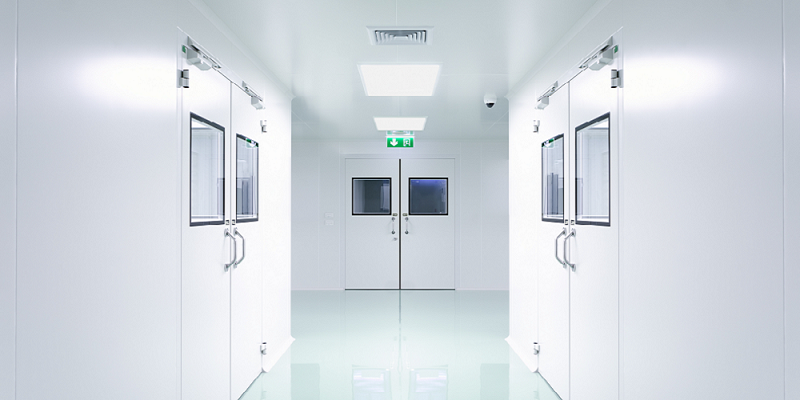
Whether it's a new factory construction or relocation, a cleanroom is an essential space for many plants. What exactly is a cleanroom? Why do plants need a clean space? How should cleanroom partitioning be done? Today, we will introduce how to build a clean space that best meets your factory's needs, and what are the differences in the construction materials available. Let's take a look at our sharing!
〈Further Reading: How to Build Partition Walls? Comparison of 8 Partition Wall Construction Methods〉
What is a Cleanroom?
A cleanroom is a clean, dust-free space. It typically uses High-Efficiency Particulate Air (HEPA) or Ultra-Low Penetration Air (ULPA) filters to remove airborne particles, and also strictly controls airflow, temperature, and humidity. A cleanroom must not only minimize the introduction or generation of contaminating particles but also control the concentration of micro-dust particles. To maintain strict control, the indoor temperature, humidity, and pressure must be regulated. They are mostly used in industries where the environment is highly critical, such as semiconductor technology factories, biochemical technology R&D facilities, or hospital research laboratories.
What is the Difference Between a Cleanroom and a Contamination-Controlled Room?
Cleanrooms are extremely strict in controlling environmental contamination, aiming to minimize airborne particles, contaminants, and other sources of pollution, usually adhering to international standards like Fed-Std-209E or ISO-14644-1. The standards for contamination-controlled rooms are generally not as strict as those for cleanrooms. Their main purpose is to provide a relatively clean environment, but not necessarily achieving the cleanliness level of a dedicated cleanroom.
Cleanroom Classification and 2 Major Applications
Although cleanrooms can be seen in many technology factories, did you know? Cleanrooms are actually categorized into different classes. Based on the class, there are specific limits on the maximum allowable concentration of micro-dust particles in the space. Below, we will use the commonly used international standards Fed-Std-209E and ISO-14644-1 as examples. The smaller the number, the higher the overall cleanliness of the environment.
Cleanroom Classification
| ISO-14644-1 | Fed-Std-209E | Maximum Concentration of Micro-Dust Particles per Unit Volume of Air (0.5µm or larger) |
|---|---|---|
| ISO4 | Class10 | Not exceeding 10 particles per cubic foot |
| ISO5 | Class100 | Not exceeding 100 particles per cubic foot |
| ISO6 | Class1000 | Not exceeding 1000 particles per cubic foot |
| ISO7 | Class10000 | Not exceeding 10000 particles per cubic foot |
| ISO8 | Class100000 | Not exceeding 100000 particles per cubic foot |
2 Major Applications of Cleanrooms
Industrial Cleanrooms
Cleanrooms are often seen in factories for the semiconductor, laser, and precision machinery industries. To prevent contamination of materials such as wafers and display panels, this type of cleanroom has stricter controls on particle concentration, sometimes requiring a special standard of not exceeding 1 particle per cubic foot.
Cleanrooms in Other Industries
Other industries that use cleanrooms include: medical, pharmaceutical, food, and similar categories. Since the operation level in these industries is less precise than in industrial cleanrooms, the stringency regarding particle concentration is relatively lower, usually ranging above 100 particles per cubic foot.
What are the Types of Cleanrooms? Overview of 3 Common Cleanroom Types
Cleanroom airflow design varies based on the cleanliness level and is primarily divided into two types: turbulent flow and laminar flow. Laminar flow is further divided into "Vertical Laminar Flow Cleanroom" and "Horizontal Laminar Flow Cleanroom." Below, we will explain the differences in detail.
Turbulent Flow Cleanroom
The airflow direction is not fixed in a turbulent flow cleanroom. After being filtered by high-efficiency filters, the air flows irregularly within the room, and airborne particles may diffuse randomly. Since there is no specific air direction, the efficiency of contaminant removal is lower compared to laminar flow cleanrooms. However, the advantage is its lower construction cost and simpler maintenance. Therefore, this type of cleanroom is suitable for applications that require a large area of clean environment but do not demand extremely high cleanliness.
Vertical Laminar Flow Cleanroom
In a vertical laminar flow cleanroom, the airflow flows uniformly downwards from the filter system on the ceiling and is carried away by the exhaust system on the floor or side walls, ensuring unidirectional airflow and high cleanliness. This type of cleanroom is more commonly used in industries requiring extremely low particulate contamination, such as semiconductors, biomedicine, and optical instruments. The advantage of a vertical laminar flow cleanroom is its effective control of contamination sources and reduction of product defect rates, but compared to turbulent flow cleanrooms, the construction and maintenance costs are higher, and the requirements for the air conditioning and exhaust systems are stricter.
Horizontal Laminar Flow Cleanroom
In a horizontal laminar flow cleanroom, air enters from the filter system on one side wall and blows horizontally towards the exhaust area on the opposite side at a uniform speed. This type of cleanroom is suitable for applications where vertical contamination needs to be avoided, such as specific laboratories or sensitive material handling areas. Although the construction cost of horizontal laminar flow is lower than vertical laminar flow, the airflow can be affected by obstacles, potentially reducing the cleanliness in localized areas. Therefore, the layout of the work area and personnel movement must be specially considered during design.
What Equipment is in a Cleanroom? 5 Key Pieces of Equipment for Building a Cleanroom
Cleanroom design usually includes the following types of equipment to prevent air contamination and meet the high standards of cleanliness required by the factory:
-
Air Filters (HEPA/ULPA Filter Grades): These filters effectively capture airborne particles and are key equipment for maintaining air cleanliness in the cleanroom.
- Air Shower: Typically located at the entrance/exit of the cleanroom, it is equipped with high-efficiency filters and blows away dust and particles from clothing before operators enter the cleanroom.
- Clean/Sterile Workbench: Designed to prevent dust generation, facilitate cleaning and disinfection, it can achieve a high-level clean space even when used in general factory or office environments.
- Fan Filter Unit (FFU): Used for air circulation in the cleanroom. It contains an ultra-high-efficiency filter to filter the air, remove airborne particles, and drive the cleanroom's air circulation, maintaining the required cleanliness and air change rate.
- Pass Box: Used for transferring items between the inside and outside of the cleanroom, avoiding contamination caused by frequent personnel entry and exit. The pass box is equipped with high-efficiency filtration and UV disinfection functions to ensure items remain clean during transfer.
Using Sandwich Panels (Ku-ban) for Cleanroom Partitioning
Building a complete cleanroom involves considering many details. In addition to the overall space planning, the construction and installation of partitions are also a very important part. "Sandwich panels" (Ku-ban) are the most commonly used building material for cleanroom partitioning. Below, we will focus on 3 types of sandwich panels with different core materials and tell you their characteristics!
〈Further Reading: What are Sandwich Panels (Ku-ban)? A Quick Look at 4 Construction Methods for Sandwich Panel Partitions〉
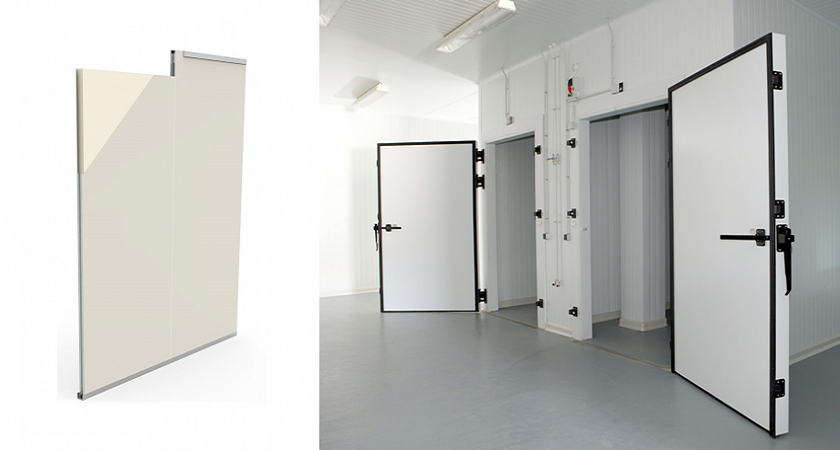
Cleanroom Partition Material 1: PU Foam Sandwich Panel
PU foam sandwich panels are manufactured by directly foaming polyurethane (PU). They are characterized by good rigidity, lightweight, sound insulation, thermal insulation, and heat resistance. They are often used for cleanroom partitioning that must remain dry, such as in food factories, to prevent special materials or food from becoming damp. In addition to being common in food factories, PU foam sandwich panels are also very suitable for residential building materials due to their high hardness, with a tensile strength of 265MPa, which is 25 times the strength of ordinary aluminum panels.
→Click Here to See Product [PU Foam Sandwich Panel]
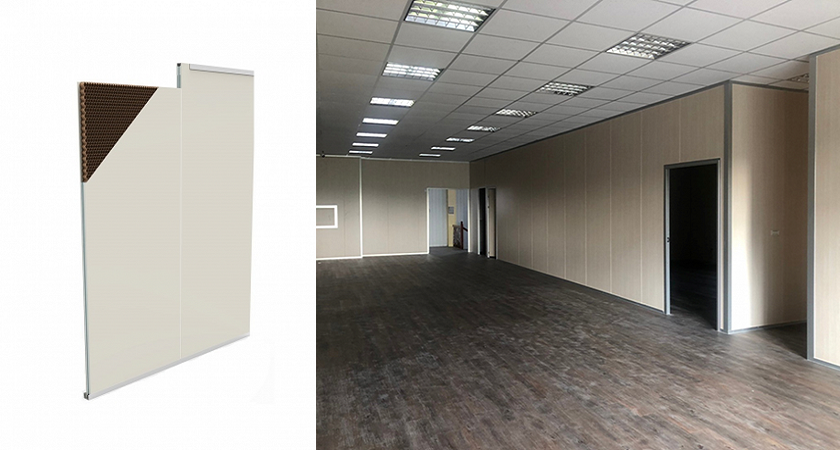
Cleanroom Partition Material 2: Paper Honeycomb Sandwich Panel
Paper honeycomb sandwich panels are characterized by lightweight, high strength, easy construction, non-polluting, and recyclable, making them an environmentally friendly product. The internal paper core uses long-lasting fire-resistant fibers and has passed CNS14705 regulatory certification, possessing a certain level of flame resistance. The honeycomb core material is composed of multiple independent small hexagonal tubes. By bonding with surface materials of the same or good tension, the structural forces of the individual units are mutually restrained. This makes paper honeycomb sandwich panels highly compression-resistant and extremely rigid flat panels, suitable for areas like cleanrooms and offices.
→Click Here to See Product [Paper Honeycomb Sandwich Panel]
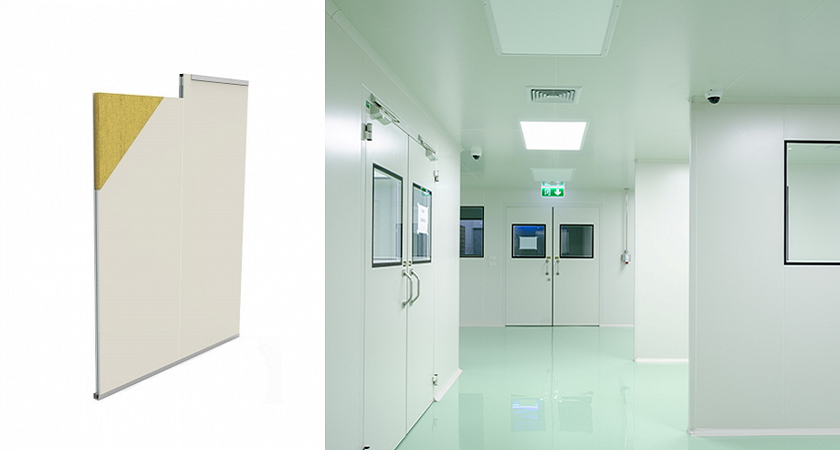
Cleanroom Partition Material 3: Fireproof Rock Wool Sandwich Panel
Fireproof rock wool sandwich panels use natural rocks, such as basalt and iron ore, as the main material. They are inorganic fibers produced by heating and fiberizing at high temperatures above 1,000 degrees Celsius, and then processed into rock wool boards. Their porous structure can effectively provide sound insulation and acoustic absorption. At the same time, due to its high-temperature resistance, it can block the spread of fire (1 hour fire resistance), and is often used in cleanroom partition designs to enhance fire safety. Furthermore, fireproof rock wool sandwich panels possess excellent thermal insulation and heat resistance capabilities. When applied to cleanroom partitioning, they can effectively reduce the budget consumption of air conditioning equipment and maintain a stable clean environment.
→Click Here to See Product [Fireproof Rock Wool Sandwich Panel]
〈Further Reading: What Fireproof Boards Are Available? Sandwich Panel Partition is Highly Recommended〉
〈Further Reading: What is Fire Compartmentation? Introducing 4 Common Types of Compartmentation〉
Comparison Table of Sandwich Panel Partition Types
| PU Foam Sandwich Panel | Paper Honeycomb Sandwich Panel | Fireproof Rock Wool Sandwich Panel | ||
|---|---|---|---|---|
| Core Material | Rigid PU Foam (Polyurethane) | Non-combustible Paper Honeycomb | Fire-resistant Long Fiber Rock Wool | |
| Weight | 13 kg/m² | 13 kg/m² | 16 kg/m² | |
| Panel Thickness | All 50mm | |||
| Length | All 6000mm | |||
| Sound Insulation Effect | 25dB | 28dB | 29dB | |
| Regulatory Certification | CNS14705 Flame Resistance Class 1, 2 | CNS14705 Flame Resistance Class 1, 2 | CNS12514 Fire Resistance 1 Hour | |
| Panel Features | Good rigidity, high hardness, lightweight, sound insulation, thermal insulation, heat resistance | Lightweight, high strength, easy construction, non-polluting, recyclable | High-temperature resistance, thermal insulation, heat resistance, sound insulation, excellent fire resistance | |
| Suitable for Use in | Food factories, residential building materials, cleanrooms | Offices, cleanrooms | Fire-rated areas, cleanrooms | |
〈Further Reading: What are the Methods for Office Partitioning? Complete Guide to Interior Partitioning Comparison〉
〈Further Reading: Where Can Light Partitions Be Used? Complete Summary of Various Light Partition Materials and Prices〉
Cleanroom Construction Details: Building High-Standard Cleanroom Partitioning
Besides choosing the right sandwich panel material, many details are involved in establishing a cleanroom. The design of cleanroom partitioning is a critical factor, affecting the overall cleanliness and airflow control. Since cleanrooms are divided into different classes based on cleanliness, many other aspects are involved, such as air conditioning, filtration, water supply and drainage, electrical equipment, and waste treatment. At the initial stage of construction, the cleanroom partitioning requirements should be thoroughly discussed with the vendor, and detailed architectural drawings, equipment drawings, electrical equipment drawings, etc., should be prepared. After construction is completed, multiple tests should be performed in accordance with the two major standards, "U.S. Federal Standard Fed-Std-209E" and "ISO-14644-1," to ensure that the "cleanliness" meets the requirements.
What is the Cost of Cleanroom Partitioning Construction?
How much does it cost to build cleanroom partitioning using sandwich panels? Why is there such a huge difference in market prices for the same sandwich panel material? Actually, many factors influence the price. The most direct is the fluctuation of raw material prices, followed by the difficulty of cleanroom construction and the area (in pings/square meters). When selecting a sandwich panel vendor, you can first inquire about their previous construction experience and confirm whether their experience is proficient. Choosing a reliable vendor can prevent subsequent problems and the need to spend more money on remediation.
Conclusion
Today, we introduced 3 types of sandwich panels used when building cleanroom partitioning. You can choose the most suitable type based on the different types of cleanrooms, fulfilling needs for sound insulation, thermal insulation, heat resistance, and fire resistance. We are an experienced sandwich panel partitioning vendor, with a professional team and technology, providing complete construction planning and after-sales service. If you have construction needs, please feel free to contact us.
〈Further Reading: How to Build a Soundproof Wall? How to Choose Soundproof Wall Materials?〉

Article Classification
Recent Articles
- What does interior decoration include? A must-read guide before interior renovation!
- How to Build Cleanroom Partitions? Cold Storage Panel Experts Guide You Through Cleanrooms
- How to renovate a bathroom? Learn about bathroom renovation projects, costs, and precautions in 5 minutes!
- How to install construction fencing in compliance with regulations? Understand key specifications and types of fencing in 3 minutes!
- What is a modular house? We'll explain its 5 major advantages and different types!