- HOME
- BLOG
- Material Comparison
- Are Modular Homes Legal? A Complete Look at 2025 Modular Home Regulations and Usage Standards!
Are Modular Homes Legal? A Complete Look at 2025 Modular Home Regulations and Usage Standards!
Are modular houses legal? The biggest concern when building a modular house is legality. In fact, as long as you follow the correct application procedures and relevant regulations—such as land zoning restrictions and structural safety—creating a compliant temporary building is not difficult. We have organized the latest 2025 application process and important regulations to help you easily understand how to plan a safe and legal modular house. Keep reading!
What is a Modular House?
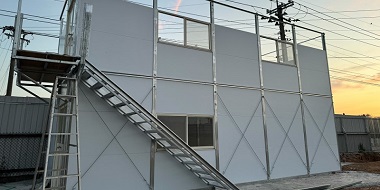
If you want to quickly set up a temporary building, a modular house is definitely the first choice! It uses a modular construction method with lightweight and sturdy materials such as steel frames and sandwich panels, making the building easy to assemble while ensuring safety. The biggest feature of modular houses is high flexibility—they can be used for small site offices, large exhibition spaces, or even post-disaster shelters. Moreover, modular houses are fast to construct, cost-effective, reusable, and environmentally friendly, meeting modern temporary building needs. They can also be adjusted according to different environments and uses, whether it’s partitioning, adding equipment, or relocating entirely.
〈Further Reading: What is a Modular House? 5 Key Benefits and Types Explained〉
〈Further Reading: Office Partitioning Methods: Complete Comparison Guide〉
Are Modular Houses Legal? Decoding Regulations and Usage Conditions
The key to building a legal modular house lies in understanding the three elements: purpose, location, and local building regulations. In Taiwan, modular houses are primarily used as temporary buildings, such as site dormitories or post-disaster shelters. As long as you apply properly and ensure structural safety and fire protection measures, there is no problem. However, when choosing a location, pay special attention to land-use regulations. Agricultural land, residential zones, and commercial zones all have specific usage rules. During design, make sure to implement firewalls, fire-rated floors, and fireproof doors and windows. According to the "Regulations on the Use of Temporary Buildings on Public Facility Reserved Land," the eave height of modular houses must be under 3.5 meters.
〈Further Reading: What is Fire Zoning? 4 Common Types Explained〉
What are the Regulations for Modular Houses in Taiwan?
Building a modular house in Taiwan requires obtaining a temporary building permit according to the Building Act. The application requires complete design drawings, location approval documents, and a description of intended use, all meeting the requirements of Article 76 of the Building Act, such as structural safety, fire performance, and public safety measures. Once approved, the temporary building permit is granted, usually valid for 1 to 3 years, with the option to extend. For example, to build a modular house as a temporary office or dormitory on agricultural land in Miaoli County, you must first apply for permission from agricultural authorities and pay attention to use restrictions before applying for the construction permit. Local government regulations may vary, so it’s recommended to check with the local construction authorities first to avoid delays.
Types of Modular Houses: 3 Main Categories
Modular houses can be divided into recreational, commercial, and industrial types, each with unique functions and features. Let’s see which modular house suits your needs!
Type 1: Recreational Modular Houses
Recreational modular houses combine practicality and comfort, ideal for vacation homes, campsites, or activity centers. They offer flexible space planning for open areas or multifunctional zones. Materials are typically eco-friendly and integrated with modern design, providing a stylish and comfortable shelter for leisure activities.
Type 2: Commercial Modular Houses
Commercial modular houses provide cost-effective space solutions for businesses, from sales centers to temporary offices or pop-up stores. They are quick to construct, customizable to brand styles, and easy to move and reuse. This not only reduces rental costs but also gives businesses flexibility in temporary spaces.
Type 3: Industrial Modular Houses
Industrial modular houses are mainly used on construction sites, providing durable and stable structures that can adapt to site conditions. Common applications include:
- Worker dormitories: safe and comfortable living spaces for different capacities.
- Office spaces: command centers for construction teams, flexible for equipment layout to improve efficiency.
- Storage: for tools, materials, or equipment, with waterproof and fireproof features for safe storage.
- Multi-functional: integrates office and living spaces, meeting flexible site needs.
These options provide comfortable work environments and flexible configurations, enhancing site efficiency!
4 Common Questions About Modular Houses
When choosing modular houses as temporary buildings, safety and building restrictions are common concerns. Here are 4 frequently asked questions to help clarify.
Q1. Are they earthquake- and fire-resistant?
Modular houses have passed various tests, with wind resistance grades 12–14 and earthquake resistance above level 7. For better fire performance, use fire-resistant panels like sandwich partitions to prevent fire spread. Proper structural design and fire protection measures make modular houses a safe and reliable temporary building option.
〈Further Reading: Fireproof Panels: Recommended Sandwich Partition Options〉
〈Further Reading: Partition Walls: 8 Construction Methods Compared〉
Q2. How many floors can a modular house have?
For structural stability and safety, modular houses are generally recommended to be no more than two stories. For three or more stories, thicker steel structures or reinforced frame connections are required. High-rise modular houses should be professionally planned and designed by experienced contractors to avoid safety risks.
Q3. What is the maximum size for modular house applications?
The building area must comply with local regulations, typically subject to:
- Floor Area Ratio (FAR): the total floor area relative to the land area. For FAR 100%, the total floor area cannot exceed the land area.
- Building Coverage Ratio (BCR): the base area relative to the land area. For BCR 50%, the building base cannot exceed half of the land area.
Temporary modular houses must also meet usage conditions and obtain local authority approval. Submit design drawings and use descriptions to ensure compliance.
Q4. What is the lifespan of a modular house?
Modular houses typically last 15–20 years, depending on material quality, usage, and maintenance. To extend lifespan and reduce wear, use high-quality steel and waterproof materials and perform regular maintenance. Temporary buildings must be updated or dismantled within the legal usage period.
Temporary Building Guide: Why Choose Modular Houses?
Temporary buildings are common on construction sites and commercial events, including modular houses, container houses, and tents. Here’s a comparison of their features.
Modular House Pros and Cons
Modular houses are quick and inexpensive to build, suitable for site dorms, temporary offices, or disaster shelters. Their design is like building blocks, easy to expand or change materials. Lifespan is shorter than regular buildings, so regular maintenance is needed. Choose professional suppliers and use moisture- and fire-resistant materials for safe occupancy.
Container House Pros and Cons
Container houses are sturdy, durable, and secure, suitable for shops, offices, or storage. They withstand weather and are good for long-term use. However, they are heavy, costly to transport and install, and require internal insulation to avoid overheating.
Tent Pros and Cons
Tents are lightweight, portable, and convenient for exhibitions or outdoor activities. They are inexpensive and easy to set up or dismantle. However, tents have poor durability and are vulnerable to strong winds and heavy rain, suitable only for short-term use.
Modular House vs Other Temporary Buildings
| Type | Modular House | Container House | Tent |
|---|---|---|---|
| Advantages | Quick to build, low cost | Sturdy, secure | Lightweight, portable |
| Disadvantages | Limited lifespan | Heavy, high transport cost | Poor wind resistance, not durable |
| Suitable Use | Construction sites, post-disaster shelters | Shops, offices | Exhibitions, temporary events |
How to Choose a Legal Modular House Supplier: 4 Key Factors
Choosing the right supplier ensures safety and peace of mind. Consider licensing, material safety, professional construction team, and after-sales service to find a trustworthy supplier and build a safe, comfortable modular house.
Choose Government-Licensed Suppliers
Check if the supplier is legally registered. Licensed suppliers have government permits and construction qualifications, follow building laws, and focus on quality management, providing reliable products and services.
Confirm Material Safety Standards
Ensure materials meet national safety standards. Fire-resistant, eco-friendly materials like sandwich panels ensure structural safety and durability, extending building life and providing a safe, healthy environment for occupants.
〈Further Reading: What is a Sandwich Panel? 4 Construction Methods Explained〉
Hire Experienced Professional Teams
Review past projects to verify experience. Experienced teams solve construction issues efficiently, provide proper planning advice, and manage schedules to ensure smooth construction.
Check After-Sales Service
Confirm the supplier offers reliable after-sales service, including warranty and technical support. Good after-sales service ensures safe use and extends the modular house’s lifespan.
Conclusion
Modular houses are quick to build, versatile, and cost-effective. For construction sites, they can serve as dormitories, offices, or storage spaces. To build a durable and safe modular house, choose a legal supplier and follow regulations to ensure quality. "Weiden Engineering" has extensive experience in modular house design and construction, from budget planning to space configuration. Their professional team ensures fast and reliable construction. For more information, contact us to plan your ideal modular house!
Article Classification
Recent Articles
- Are Modular Homes Legal? A Complete Look at 2025 Modular Home Regulations and Usage Standards!
- How to build a soundproof wall? How to choose soundproof wall materials?
- What are some office partitioning methods? A comprehensive guide to interior partitions.
- What are warehouse panels? A quick introduction to 4 types of warehouse panel partition construction methods