BLOG

- HOME
- BLOG
- Material Comparison
- What are some office partitioning methods? A comprehensive guide to interior partitions.
What are some office partitioning methods? A comprehensive guide to interior partitions.
Aug 30, 2022
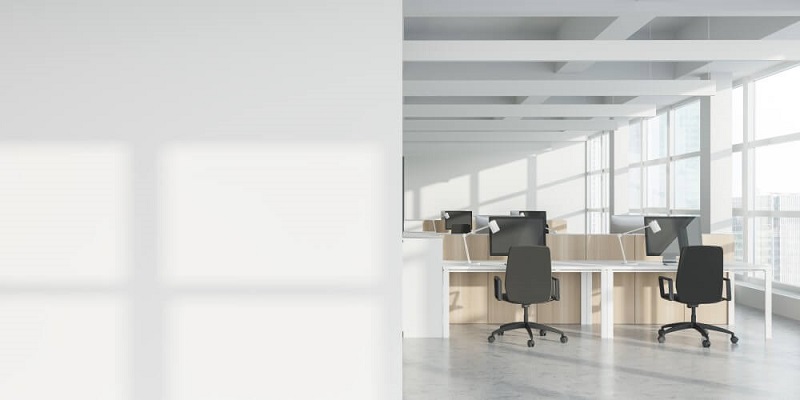
Open-plan offices look bright and spacious, but in practice, noise disturbances can seriously affect work efficiency. A good working environment requires careful spatial planning, using partitions to create multiple independent spaces for maximum utilization. Today, we introduce 8 types of office partition methods to help you find the most suitable construction approach. Some partition methods allow flexible adjustment according to needs, and for thoughtful consideration, they can even be reused if the office relocates, avoiding extra costs. These high-CP-value office partitions are worth knowing about.
〈Further Reading: What Are Modular Panels? Learn 4 Partition Methods Quickly〉
〈Further Reading: How to Build Cleanroom Partitions? Expert Tips on Modular Panels〉
〈Further Reading: How to Build Partition Walls? Comparison of 8 Methods〉
〈Further Reading: Fireproof Boards Options? Modular Panels Are Recommended〉
The Importance of Office Partition Planning
Office partition planning should not be overlooked. Here are several reasons emphasizing its importance:- Improve Work Efficiency
Well-designed office partitions help employees work more efficiently. They ensure that workflows between different departments and teams are uninterrupted, reducing distractions and increasing focus. - Enhance Collaboration and Communication
Open-office partitions can promote teamwork and communication. At the same time, enclosed partitions providing private workspaces help conduct important discussions and meetings. - Provide Privacy and Focus
Some tasks require high concentration and privacy. Proper office partitions offer isolation for employees needing independent work, minimizing disturbances. - Adapt Effectively to Environmental Changes
Accommodates changes in staff numbers, departmental adjustments, and future expansion needs. - Reflect Company Culture and Image
The style and design of office partitions reflect a company's culture and values, helping create a work environment conducive to a positive corporate image.
4 Key Tips for Office Partition Planning
1. Understand Your Needs
Light steel frame partitions are fixed between the ceiling and floor with top and bottom channels, with columns installed leaving space for doors and windows. A light steel frame system forms the structure, which can be filled with soundproof cotton. Panels are usually gypsum board or calcium silicate board, allowing a wall to be built quickly and easily.2. Open Space vs. Enclosed Space
Light steel frame partitions are fixed between the ceiling and floor with top and bottom channels, with columns installed leaving space for doors and windows. A light steel frame system forms the structure, which can be filled with soundproof cotton. Panels are usually gypsum board or calcium silicate board, allowing a wall to be built quickly and easily.3. Proper Ventilation and Lighting
Light steel frame partitions are fixed between the ceiling and floor with top and bottom channels, with columns installed leaving space for doors and windows. A light steel frame system forms the structure, which can be filled with soundproof cotton. Panels are usually gypsum board or calcium silicate board, allowing a wall to be built quickly and easily.4. Flexibility
Consider future changes and expansion when designing partitions to ensure the office can adapt to evolving needs.What Are the Office Partition Methods?
There are many indoor partition methods. Here we summarize six types: light steel frame, white brick, ceramic aggregate, wood, red brick, and modular panel partitions. Each method has its pros and cons. You can select the appropriate method based on your space requirements. Which one offers the best value? Let's take a look.Light Steel Frame Partition
Light steel frame partitions are fixed between the ceiling and floor with top and bottom channels, with columns installed leaving space for doors and windows. The light steel frame system forms the structure, which can be filled with soundproof cotton. Panels are usually gypsum board or calcium silicate board, allowing a wall to be built quickly and easily.Wood Partition
Wood partitions are not entirely made of wood; they use wood studs as the frame, calcium silicate board on both sides, and soundproof cotton in the middle. A 30-ping space (approx. 100 m²) can be completed in 2–3 days. Quick construction makes wood partitions suitable for office partitioning.White Brick Wall
White brick walls, also called ALC lightweight concrete, use cement, lime, and fine sand. Advantages include light weight and simple, fast construction. However, drawbacks include poor water resistance, prone to cracks, low load capacity, and low earthquake resistance. It is less commonly used and not recommended.Red Brick Wall
Red brick walls are a traditional partition method. Due to the heavy weight, structural capacity is limited. Construction is complicated, slow, and weather-dependent. Only after drying can plaster and paint be applied. Recently, red brick partitions are gradually being replaced by other methods.Ceramic Aggregate Wall
Ceramic aggregate walls, also called “special耐 walls,” are precast from cement and ceramic aggregate, cut to size, and transported for installation. They are lightweight, fireproof, heat-insulating, soundproof, load-bearing, earthquake-resistant, pest-resistant, and quick to install. The rough surface requires additional finishing like plaster, paint, or covering with calcium silicate or wood veneer, adding extra cost.Movable Partition
Made of movable screens or panels, available in many styles and sound-absorbing materials. Its high flexibility allows quick adjustment of office layouts and zoning of different work areas.Glass Partition
Glass partitions provide an open and transparent feel while maintaining some privacy. They help promote communication and light transmission, suitable for offices seeking elegance, modernity, and visual appeal while maintaining moderate privacy.Modular Panel|High-Value Partition
Modular panels are our recommended office partition. Steel forms the main frame, lined with non-metal materials like PU foam, rock wool, or honeycomb paper, and covered with metal sheets such as painted galvanized steel or stainless steel. They are easy to clean, durable, fire-resistant, soundproof, impact-resistant, moisture-proof, and load-bearing, with a lifespan of over ten years. They are highly flexible, allowing relocation or layout changes. Ideal for cleanrooms, factories, or office partitions.〈Further Reading: What Are Modular Panels? Learn 4 Partition Methods Quickly〉
Comparison Table of 8 Office Partition Methods
| Partition Method | Light Steel Frame Partition | Woodwork | White Brick Wall | Red Brick Wall | Ceramsite Wall | Screen Partition | Glass Partition | Modular Panel |
|---|---|---|---|---|---|---|---|---|
| Material | Light Steel Frame + Panels |
Wood Beams + Panels |
Lightweight White Brick | Cement Mortar + Bricks |
Ceramsite Panels + Angle Iron + Mortar |
Wood + Metal + Plastic etc. |
Glass | Painted Steel Plate + Lining Material |
| Weight | Approx. 120 kg/m² | Approx. 35 kg/m² | Approx. 65 kg/m² | Approx. 200 | Approx. 75 | Depends on product | Depends on product | Approx. 15 |
| Thickness | Approx. 8cm | Approx. 4~8cm | Approx. 10cm | Approx. 12cm | Approx. 8~10cm | Depends on product Not soundproof |
Approx. 5mm~10mm | Approx. 5 cm |
| Construction Time | Fast | Fast | Fast | Slow | Medium | Fast | Fast | Fastest |
| Wall Smoothness | Good | Good | Good | Requires Finishing | Good | Good | High Construction Requirement | Good |
| Wall-Mount Capacity | Fair | Fair | Poor | Strong | Good | Weak | Strong | Good |
| Seismic Resistance | Poor | Poor | Fair | Weak | Good | Poor | Good | Good |
| Construction Method | Dry | Dry | Semi-Wet | Wet | Semi-Wet | Dry | Dry | Dry |
| Reusable | No | No | No | No | No | Reusable | No | Reusable Suitable for Relocation Layout Change |
| Price per Ping (Material + Labor) |
$3500-6500 | $3500-6000 | $3500-5000 | $7000-10000 | $7000-8000 | $4000-20000 | $13000-17000 | Click to Inquire |
| Overall Recommendation | ★★★★☆ | ★★★★☆ | ★★☆☆☆ | ★★★☆☆ | ★★★★☆ | ★★★★☆ | ★★★★☆ | ★★★★★ |
4 Things to Consider When Planning Office Partitions
1. Emergency Exits
Light steel frame partitions are fixed between the ceiling and floor with top and bottom channels, with columns installed leaving space for doors and windows. The light steel frame system forms the structure, which can be filled with soundproof cotton. Panels are usually gypsum board or calcium silicate board, allowing a wall to be built quickly and easily.2. Testing and Evaluation
Light steel frame partitions are fixed between the ceiling and floor with top and bottom channels, with columns installed leaving space for doors and windows. The light steel frame system forms the structure, which can be filled with soundproof cotton. Panels are usually gypsum board or calcium silicate board, allowing a wall to be built quickly and easily.3. Legal Compliance
Light steel frame partitions are fixed between the ceiling and floor with top and bottom channels, with columns installed leaving space for doors and windows. The light steel frame system forms the structure, which can be filled with soundproof cotton. Panels are usually gypsum board or calcium silicate board, allowing a wall to be built quickly and easily.4. Space Functionality
Consider future changes and expansion when designing partitions to ensure the office can adapt to evolving needs.Conclusion
Today we introduced 8 office partition methods and provided a detailed comparison table. For indoor partition needs, we recommend modular panels. They excel in construction speed, wall flatness, wall-mounting capacity, earthquake resistance, and reusability. We are professional office partition providers with rich experience and teams, using new technologies and tools to provide suitable partition solutions based on clients’ needs. Our service philosophy: quality first, clear communication, and trustworthy. For construction inquiries, please contact us.〈Further Reading: How to Build Partition Walls? Comparison of 8 Methods〉
〈Further Reading: Fireproof Boards Options? Modular Panels Are Recommended〉