
BLOG

- HOME
- BLOG
- Material Comparison
- What are warehouse panels? A quick introduction to 4 types of warehouse panel partition construction methods
What are warehouse panels? A quick introduction to 4 types of warehouse panel partition construction methods

Everyone knows that time is money. With the increasing needs for company expansion, factory relocation, and renovation, partitioning methods must also pursue lighter, faster construction. The time cost of construction significantly impacts a company's productivity, making quick and durable sandwich panel partitions gradually become the mainstream choice. Their reusability is the most popular factor. Today, we introduce 4 types of sandwich panel partitions. There is no absolute good or bad; you can choose the appropriate partition construction method based on your space requirements. What are the differences between them? Let's take a look at our sharing.
〈Further Reading: How to Build a Cleanroom Partition? A Sandwich Panel Expert Tells You〉
〈Further Reading: What is Fire Zoning? Introducing 4 Common Types of Zoning〉
〈Further Reading: How to Build a Partition Wall? Comparison of 8 Major Partition Construction Methods〉
The features of Paper Honeycomb Sandwich Panels are light weight, high strength, easy construction, non-polluting, and recyclability, making them an environmentally friendly product. The paper material uses long-lasting fireproof fibers, certified to meet the CNS14705 Class 1 and Class 2 fire-resistance standards. The honeycomb core panel consists of countless independent small hexagonal tubes. When the top and bottom surfaces of the honeycomb core material are bonded with the same material or other planar materials with good tension, the effect of mutual structural force traction is achieved. Due to the core material, the paper honeycomb panel is a pressure-resistant and highly rigid flat panel material, and combined with its economical price, paper honeycomb sandwich panels are suitable for general areas such as offices and staff/student dormitories.
〈Further Reading: What are the Office Partition Methods? A Complete Comparison Guide for Interior Partitions〉
〈Further Reading: Where Can Light Partitions Be Used? A Summary of Various Light Partition Materials and Prices〉
〈Further Reading: What Fireproof Boards Are Available? Sandwich Panels are Highly Recommended for Partitions〉
→Inquire Online Now
Today, we introduced the individual benefits of 4 types of sandwich panels. Different space needs call for different selection recommendations. If you have partitioning needs, we highly recommend the sandwich panel construction method. Whether for fire resistance, sound insulation, thermal retention, impact resistance, moisture resistance, or load-bearing requirements, sandwich panels are your best choice. We are professional sandwich panel partition vendors with extensive practical experience and a dedicated team. Based on clients' different needs and uses, we test new technologies and tools to provide suitable partition engineering planning. Our service philosophy is: emphasizing quality, effective communication, and credibility. We are partition experts who provide complete after-sales service. Please contact us if you require construction.
What is a Sandwich Panel?
Sandwich panels (Ku-Ban) are a popular partitioning building material. Their overall framework is primarily made of steel, with non-metallic inner cores such as PU foam, rock wool, or paper honeycomb. The exterior is encased with metallic materials like galvanized pre-painted steel or stainless steel, making them very easy to clean, aesthetically pleasing, and highly durable. Sandwich panels must have fire-resistance certification approved by the Construction and Planning Agency. Under normal use, their lifespan can exceed ten years, and they are highly movable, allowing for easy modifications if a factory relocation or partition change is needed in the future. Sandwich panels are suitable for cleanroom/aseptic room partitions, factory partitions, and office partitions.〈Further Reading: How to Build a Cleanroom Partition? A Sandwich Panel Expert Tells You〉
What are the Types of Sandwich Panels?
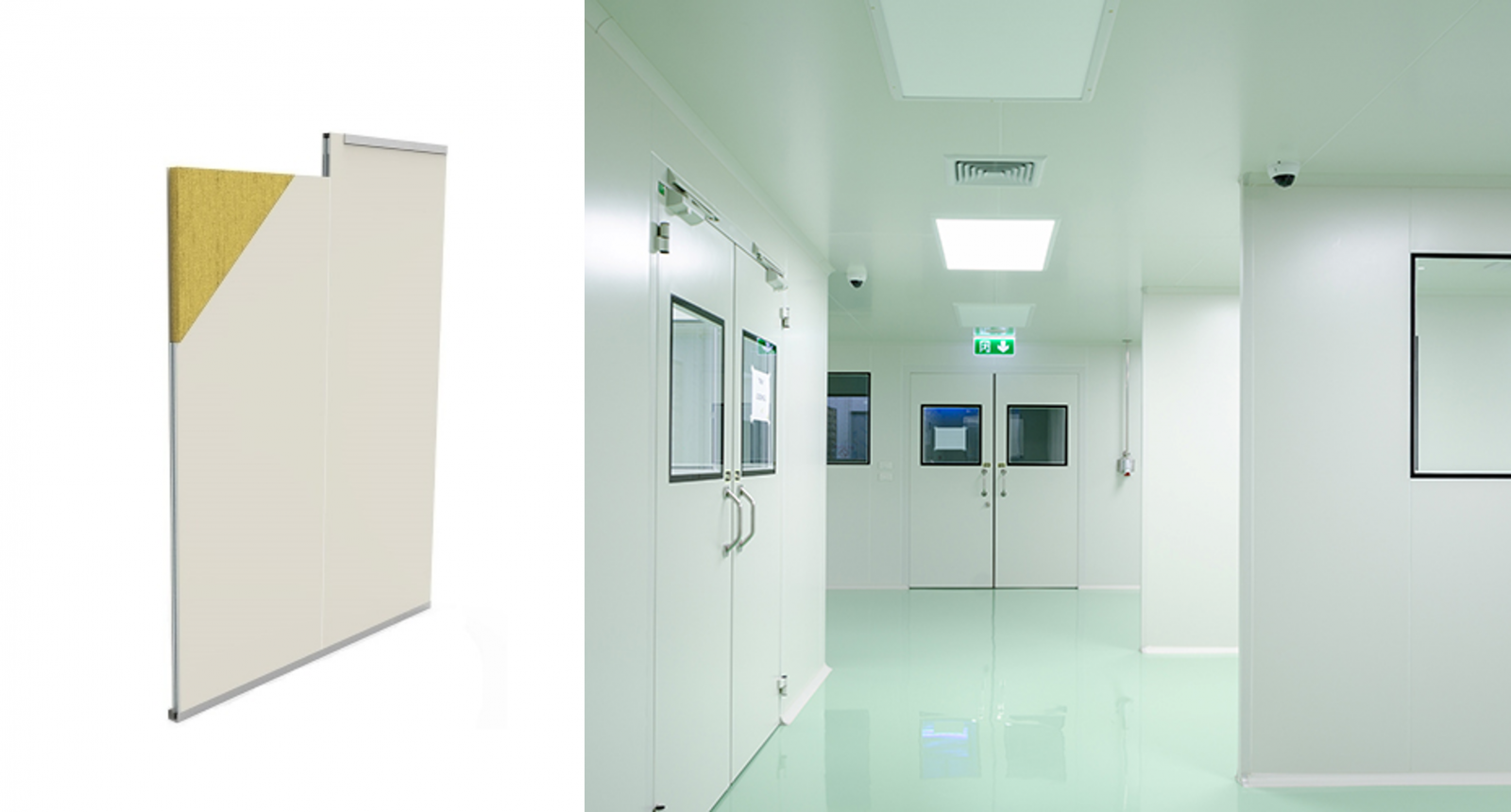
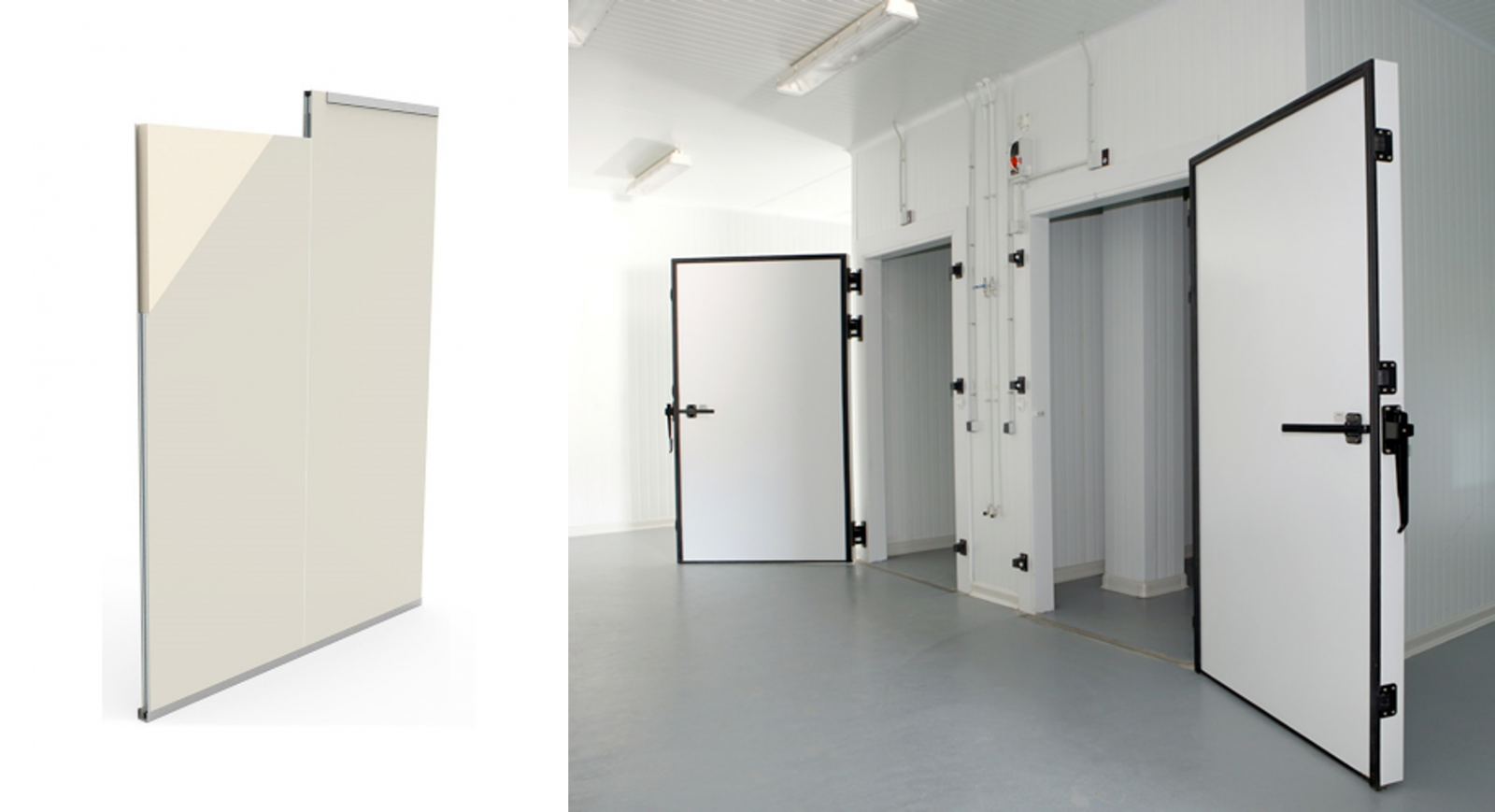
The types of sandwich panels are primarily distinguished by their inner core material, mainly manufactured using four core materials: rock wool, PU polyurethane, paper honeycomb, and aluminum honeycomb. Below, we introduce the differences between these 4 types of sandwich panels to help you precisely select the most suitable partition!Fireproof Rock Wool Sandwich Panel
The biggest feature of Rock Wool Sandwich Panels is that they effectively provide fire protection, thermal insulation, and soundproofing. Rock wool boards are primarily made from natural rocks such as basalt, dolomite, and iron ore, melted at temperatures above 1000°C and then fiberized to create an inorganic fiber. The porous structure of the rock wool board offers excellent sound insulation and absorption properties. Rock wool boards for construction have excellent fire resistance, thermal insulation, and soundproofing effects, making them highly suitable for spaces designated as fire zones in factories, effectively preventing the spread of fire. Furthermore, due to the excellent thermal insulation of rock wool boards, their high heat resistance can also save on air conditioning operating costs.〈Further Reading: What is Fire Zoning? Introducing 4 Common Types of Zoning〉
PU Foam Sandwich Panel
PU Foam Sandwich Panels are formed by directly foaming polyurethane (PU). The features of PU foam boards are fire resistance, light weight, excellent thermal insulation, high strength, good rigidity, impact resistance, and resistance to moisture, making them suitable for areas that need to be kept dry to prevent mildew. Besides being suitable for food factory partitions, the good rigidity and high impact resistance of PU foam boards (tensile strength of 265MPa, 25 times the strength of ordinary aluminum panels) also make them an excellent choice for home building materials.〈Further Reading: How to Build a Partition Wall? Comparison of 8 Major Partition Construction Methods〉
Paper Honeycomb Sandwich Panel
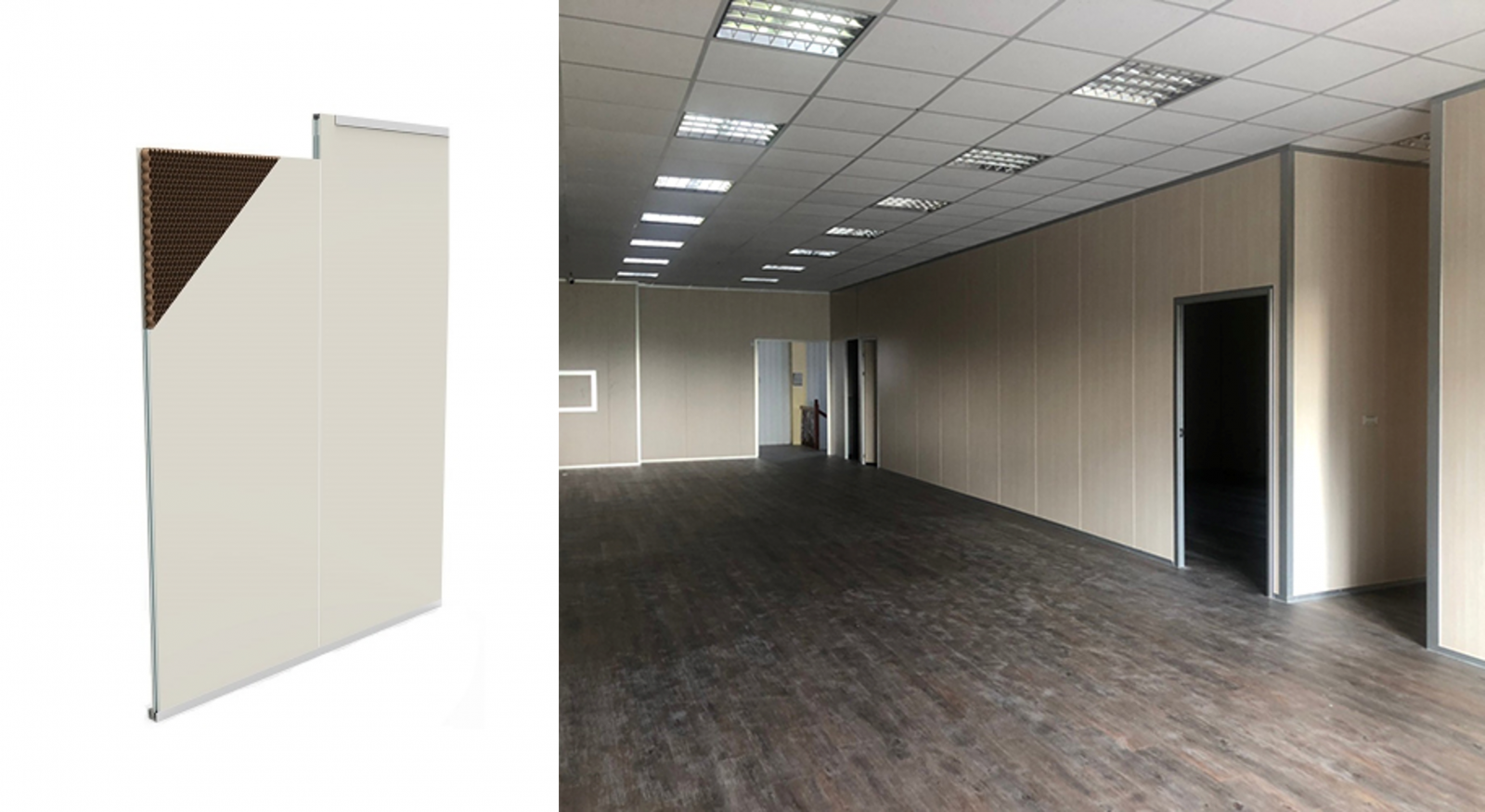
The features of Paper Honeycomb Sandwich Panels are light weight, high strength, easy construction, non-polluting, and recyclability, making them an environmentally friendly product. The paper material uses long-lasting fireproof fibers, certified to meet the CNS14705 Class 1 and Class 2 fire-resistance standards. The honeycomb core panel consists of countless independent small hexagonal tubes. When the top and bottom surfaces of the honeycomb core material are bonded with the same material or other planar materials with good tension, the effect of mutual structural force traction is achieved. Due to the core material, the paper honeycomb panel is a pressure-resistant and highly rigid flat panel material, and combined with its economical price, paper honeycomb sandwich panels are suitable for general areas such as offices and staff/student dormitories.〈Further Reading: What are the Office Partition Methods? A Complete Comparison Guide for Interior Partitions〉
〈Further Reading: Where Can Light Partitions Be Used? A Summary of Various Light Partition Materials and Prices〉
Aluminum Honeycomb Sandwich Panel
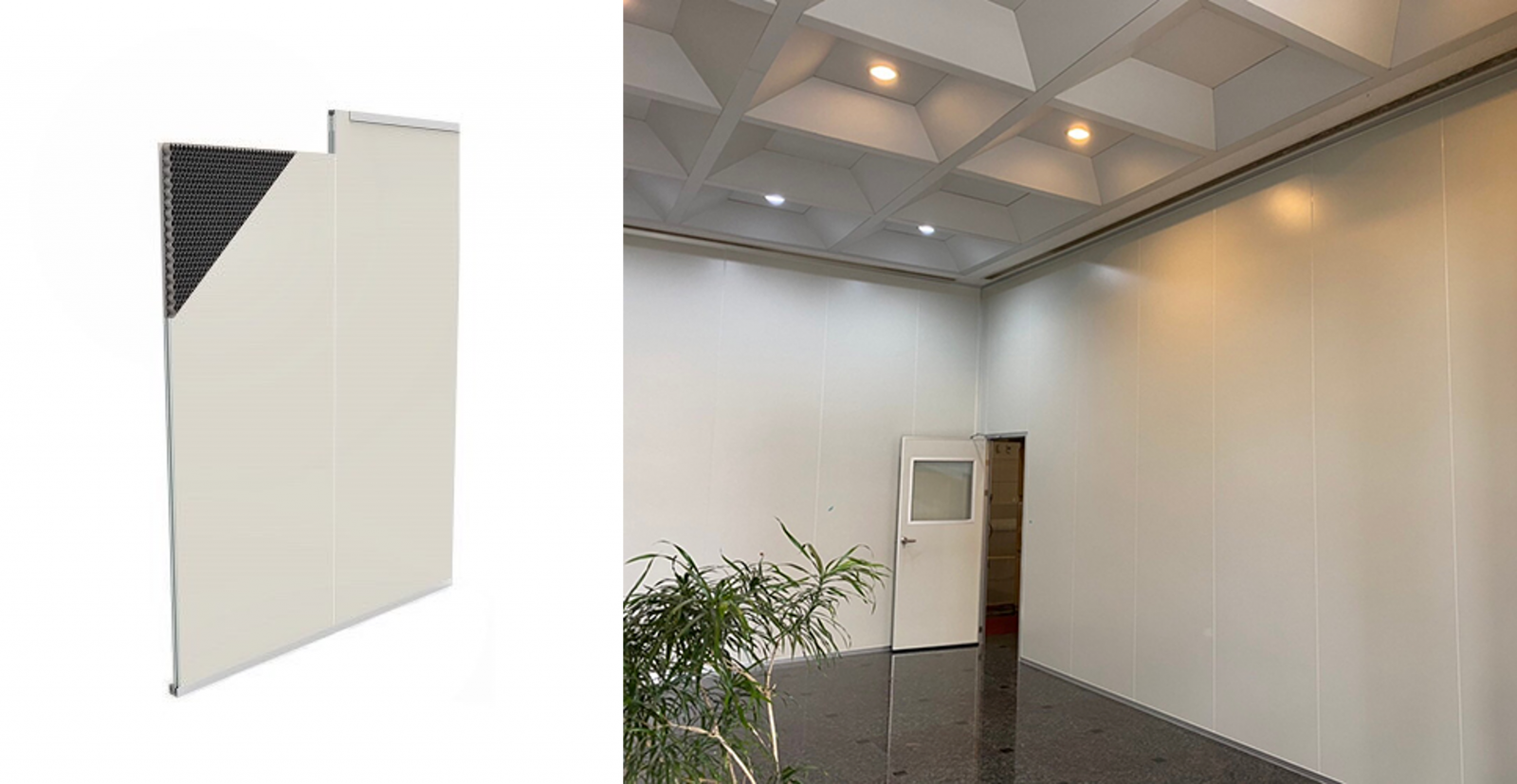
The features of Aluminum Honeycomb Sandwich Panels are high strength, good rigidity, precise thickness, flat appearance, and resistance to moisture. Like the paper honeycomb panel, it is composed of countless independent small hexagonal tubes, but the difference lies in the material used. The aluminum material is certified to meet the CNS14705 Class 1 fire-resistance standard. Its moisture-proof characteristics make it commonly used for partitioning on ships. Additionally, aluminum honeycomb produces less dust when cut, and its non-polluting characteristic is often used in the electronics wafer industry and semiconductor industry.〈Further Reading: What Fireproof Boards Are Available? Sandwich Panels are Highly Recommended for Partitions〉
Comparison Table of Sandwich Panel Partition Types
| Fireproof Rock Wool Panel | PU Foam Panel | Paper Honeycomb Panel | Aluminum Honeycomb Panel | |
|---|---|---|---|---|
| Inner Core Material | Fire-resistant long fiber rock wool | Rigid PU Foam (Polyurethane) | Non-combustible paper honeycomb | Non-combustible aluminum honeycomb |
| Characteristics | Cold insulation, Heat insulation, Soundproofing, Fire resistance, Excellent thermal retention | Fireproof, Light weight, Excellent thermal insulation, High strength, Good rigidity, Impact resistance | Light weight, High strength, Easy construction, Non-polluting, Recyclable | High strength, Good rigidity, Precise thickness, Flat appearance, Resistant to moisture |
| Weight | 16 kg/m² | 13 kg/m² | 13 kg/m² | 14 kg/m² |
| Thickness | 50mm | 50mm | 50mm | 50mm |
| Length | 6000mm | 6000mm | 6000mm | 6000mm |
| Sound Insulation | 29dB | 25dB | 28dB | 18dB |
| Outer Steel Plate Material | 0.5mm Galvanized Pre-painted Steel, Stainless Steel, Electrostatic Steel Plate, Antibacterial Steel Plate | |||
| Regulatory Certification | CNS14705 Fire Resistance 1 Hour |
CNS14705 Fire-Retardant Class 1 Fire-Retardant Class 2 |
CNS14705 Fire-Retardant Class 1 Fire-Retardant Class 2 |
CNS14705 Fire-Retardant Class 1 |
| Suitable Usage Area | Fire Zones, Cleanrooms | Food Processing Plants, Cold Storage Rooms | General use, Offices, Dormitories | Ships, Semiconductor Industry, Precision Technology Industry |
Are Sandwich Panel Materials Good? Many Benefits of Sandwich Panel Partitions!
Traditional partitions easily grow mold when damp, have weaker impact resistance, and local replacement requires extensive effort. Sandwich panels largely address the shortcomings of calcium silicate boards, offering many advantages for partitioning. They significantly improve sound insulation and thermal retention, and their characteristics of good rigidity, impact resistance, and excellent load-bearing capacity allow for safe walking during ceiling maintenance. The sturdy structure ensures a long service life, and they are easy to clean and maintain. The biggest benefit for factories is the shorter construction period for sandwich panel partitions, rapidly and effectively minimizing the impact on production line capacity due to layout changes. By pairing suitable materials according to different client needs, they can be disassembled and reused for future factory relocation, expansion, or layout modifications. Their recyclable and renewable materials also reduce pollution, making them the optimal choice for partitioning!Comparison Table: Sandwich Panel vs. Calcium Silicate Board
| Sandwich Panel Partition | Calcium Silicate Board Partition | |
|---|---|---|
| Fire Resistance | Fire Resistance 1 Hour, Fire-Retardant Class 1 & 2 | Fire Resistance 1 Hour, Fire-Retardant Class 1 & 2 |
| Sound Insulation | Good sound insulation quality | Weaker sound insulation quality |
| Thermal Insulation | Good thermal insulation effect | Poor thermal insulation effect |
| Impact Resistance | Impact resistant, no cracking, excellent load-bearing capacity | Not impact resistant, easily cracked, poor load-bearing capacity |
| Weather & Moisture Resistance | Not affected by moisture/deformation, minor temperature influence | Prone to moisture/deformation, major temperature influence |
| Ceiling Load | Personnel can walk on the ceiling | Personnel cannot walk on the ceiling |
| Construction Period | Fast construction, easy to modify, short period | Complex construction, difficult to modify, long period |
| Environmental Standard | Has green building material label, recyclable and renewable | Not recyclable and renewable |
| Cleaning & Maintenance | Easy to clean, simple maintenance, washable | Difficult to clean, not easily washable |
| Reusability | Reusable for future factory relocation or expansion | Cannot be relocated, not reusable |
| Recommendation Level | ★★★★★ | ★★★☆☆ |
How Much Does a Sandwich Panel Partition Cost? What is the Price per Ping (or Square Meter)?
Why do sandwich panels of the same material on the market have such a big price difference? Is the expensive one necessarily better? Or is the cheap one definitely bad? These are common questions for people who need partitions. Even though raw material costs fluctuate, a reference and a stable, reasonable quotation method can still be provided. Construction environment conditions also affect the price. When choosing a sandwich panel vendor, check if the company has a proper business registration and factory, and if they are a long-standing partition supplier. The more experienced they are, the more reassuring they can be. Do not sacrifice quality by choosing a low-quality vendor just to save a little money, as re-doing the project will end up costing more unnecessarily.→Inquire Online Now
Conclusion
Today, we introduced the individual benefits of 4 types of sandwich panels. Different space needs call for different selection recommendations. If you have partitioning needs, we highly recommend the sandwich panel construction method. Whether for fire resistance, sound insulation, thermal retention, impact resistance, moisture resistance, or load-bearing requirements, sandwich panels are your best choice. We are professional sandwich panel partition vendors with extensive practical experience and a dedicated team. Based on clients' different needs and uses, we test new technologies and tools to provide suitable partition engineering planning. Our service philosophy is: emphasizing quality, effective communication, and credibility. We are partition experts who provide complete after-sales service. Please contact us if you require construction.Are You Looking for a Sandwich Panel Vendor? Click Now for 【 Free Consultation & Planning 】


Johnson
The author possesses years of practical engineering experience and project collaboration skills, excelling at solving problems with clear logic and reliable technical thinking. Focusing on system planning, engineering quality and efficiency optimization, the author is committed to providing stable and trustworthy engineering content and perspectives with professionalism and integrity.