
BLOG

- HOME
- BLOG
- Related Knowledge
- What is fire zoning? This article introduces four common zoning types.
What is fire zoning? This article introduces four common zoning types.
Aug 23, 2022
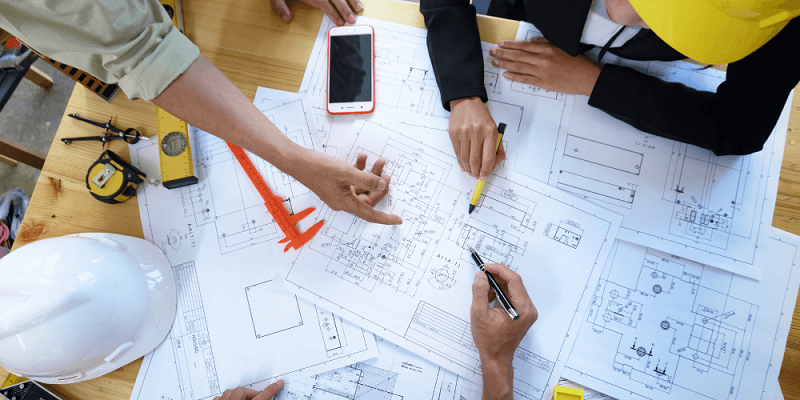
Have you ever seen news reports about major fires on TV? It’s always regrettable to see such incidents, and no one can predict when accidents will happen. What we can do is to prevent them in advance! Today, we will introduce what “fire compartmentation” is and the different types of compartment designs. Fire prevention is extremely important—especially if you run a company, factory, or public facility. Having proper fire compartment regulations not only ensures life safety but also reduces property loss. Let’s take a look together!
What is Fire Compartmentation?
Fire compartmentation is planned and constructed in accordance with regulatory requirements to ensure safety. When a fire occurs, in order to prevent it from spreading, the building is divided into several areas using fire-rated floors, firewalls, and fire doors/windows. This is called “fire-resistant construction.” Its purpose is to keep the fire contained within a limited area, preventing the spread of flames, heat, smoke, and toxic substances. This also buys time for evacuation and reduces loss of life and property.
〈Extended Reading: What Types of Fireproof Boards Are Available? Partition Panels Most Recommended〉
What Is the Purpose of Fire Compartmentation?
Fire compartmentation uses fire-resistant materials to achieve fire-stopping effects. With proper compartment design, weaknesses such as electrical conduits, ventilation ducts, and partition gaps—which can allow fire to spread—are eliminated. Fire compartmentation effectively isolates flames, heat, smoke, and toxic gases to achieve the goal of “not letting even a drop of fire leak through.”
- Prevent the spread of fire.
- Provide more time for evacuation.
- Prevent the fire from extending to other spaces.
- Reduce loss of life and property.
How to Plan Fire Compartmentation? Four Common Types
Horizontal Compartmentation
The floor area is horizontally divided into multiple independent fire zones based on legal requirements. Fire doors, windows, firewalls, and other fire protection facilities are used to separate spaces. These facilities must have at least one hour of fire resistance.
Vertical Compartmentation
The floor area is vertically divided into multiple independent fire zones based on legal requirements. Fire-rated floors are used to separate the spaces, and the fire protection facilities must have at least one hour of fire resistance.
Floor Compartmentation
According to Article 79-2 of the Building Technical Regulations – Construction Design Chapter, areas that connect multiple floors must be compartmentalized. These include atriums, staircases, escalator spaces, elevator shafts, pipe shafts penetrating floors, and similar spaces. Fire protection facilities installed in elevator shafts must have smoke-sealing capability; maintenance doors in pipe shafts must have at least one hour of fire resistance and smoke-sealing capability.
Usage-Based Compartmentation
This type of compartmentation applies when different functional spaces exist within a building. Spaces like kitchens, storage rooms, electrical rooms, and hospital wards must have at least one hour of fire resistance. The interior finishing must use non-combustible materials, and doors/windows must also be made of non-combustible materials.
Which Buildings Require Fire-Resistant Construction?
According to Article 69, Chapter 3, Section 3 of the Building Technical Regulations – Construction Design Chapter, buildings under categories A, B, C, D, E, F, G, H, and I must have main structures built with non-combustible materials. Facilities such as hospitals or care centers—where many mobility-impaired individuals gather—must follow stricter planning regulations. Places storing chemicals must comply with standards based on the type and quantity of hazardous materials. Details are provided below:
Category A – Public Assembly
- Theaters, cinemas, performance halls, cabarets, auditoriums.
- Community education centers, gymnasiums, community activity centers.
- Stations (bus, rail, metro).
- Ferry terminals and passenger waiting areas.
- Airports and terminal buildings.
The above and similar buildings must adopt fire-resistant construction.
Category B – Commercial
- Department stores, shopping malls.
- Markets (supermarkets, retail markets, vendor clusters).
- Exhibition halls, wholesale stores.
- Restaurants, eateries, beverage shops, cafés.
- International tourist hotels, standard tourist hotels, regular hotels.
Buildings of these types with three or more floors, with a total floor area of over 3,000 m², or any floor with over 500 m², must be fire-resistant.
Category C – Industrial & Storage
- Substations, auto repair shops, factories.
- Slaughterhouses, power plants, waste treatment facilities, warehouses.
- Car wash stations, car dealerships, archives, logistics centers.
- Telecom machine rooms, TV/movie/broadcast studios.
- Laboratories, etc.
Buildings of these types with three or more floors, with a total floor area over 1,500 m² (excluding factories), or any floor with over 500 m², must be fire-resistant.
Category D – Recreation, Culture & Education
- Conference halls, exhibition halls, museums, art galleries, libraries, aquariums, science centers, display centers, archives, cultural heritage museums, observatories, art centers.
- Classrooms, educational buildings.
- Tutoring/training centers and after-school care centers.
Buildings of these types with three or more floors and a total floor area over 2,000 m² must be fire-resistant.
Category E – Religious & Funeral
- Temples
- Shrines
- Churches
- Funeral halls
Buildings of these types with three or more floors and a total floor area over 2,000 m² must be fire-resistant.
Category F – Health, Welfare & Rehabilitation
- Hospitals, sanatoriums.
- Nursing homes, long-term care facilities.
- Institutions for persons with disabilities.
- Vocational training centers for persons with disabilities.
- Special education schools.
- Kindergartens, child and youth welfare institutions.
- Early intervention centers for children with developmental delays.
Buildings of these types with three or more floors, where the combined floor area of two floors exceeds 300 m², must be fire-resistant.
Category G – Office & Service
- Offices of public utilities: postal, telecom, water, electricity.
- Government agencies.
- Employment service centers for persons with disabilities.
- Health centers.
- Medical institutions with fewer than 10 beds.
- Public restrooms.
- Convenience stores.
Buildings of these types with three or more floors and a total floor area over 2,000 m² must be fire-resistant.
Category H – Residential
- Nursing homes and long-term elderly care institutions.
- Residential elderly care facilities: nursing institutions, assisted living institutions, recreation centers, service centers.
- Residential buildings with six or more floors.
- Residential buildings under five floors with fifty or more units.
Buildings of these types with three or more floors, where the combined area of two floors exceeds 300 m², must be fire-resistant.
Category I – Hazardous Materials
- Locations regulated by the Standards for Public Hazardous Materials and Flammable High-Pressure Gas Installations and Safety Management.
- Gas stations.
- Gas filling stations.
- Natural gas storage tanks and flammable gas tanks.
- Fireworks manufacturing, storage, and sales facilities.
For these buildings, the fire-resistant construction requirements are separately stipulated by the Ministry of the Interior based on the type and quantity of hazardous materials.
Conclusion
Today, we provided an in-depth introduction to the importance of fire compartmentation and shared relevant regulations for various industries. Business owners should always consider safety in advance! With proper planning during construction, fire disasters can be prevented, reducing regret with simple yet effective measures. We are a professional fireproof building materials manufacturer with extensive experience in fire compartmentation planning and construction, offering complete after-sales service as building experts. If you need construction services, feel free to contact us.

Article Classification
Recent Articles
- What does interior decoration include? A must-read guide before interior renovation!
- How to Build Cleanroom Partitions? Cold Storage Panel Experts Guide You Through Cleanrooms
- How to renovate a bathroom? Learn about bathroom renovation projects, costs, and precautions in 5 minutes!
- How to install construction fencing in compliance with regulations? Understand key specifications and types of fencing in 3 minutes!
- What is a modular house? We'll explain its 5 major advantages and different types!