
BLOG

- HOME
- BLOG
- Related Knowledge
- What's the difference between interior decoration and interior design? Let us explain the differences to you.
What's the difference between interior decoration and interior design? Let us explain the differences to you.
Mar 30, 2023
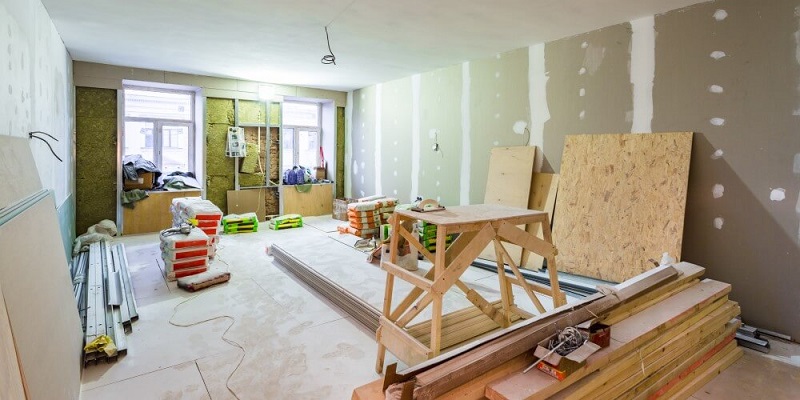
Have you heard of anti-overflow barriers? Do you know what a Class A hoarding anti-overflow barrier is? Although "anti-overflow barrier" may sound unfamiliar, it is actually closely related to our daily lives! Next, let us learn about the types of anti-overflow barriers and the key considerations for anti-overflow barrier construction. Let's take a look now!
〈Further Reading: What is Fire Compartmentation? Introducing 4 Common Types of Compartmentation〉
What is an Anti-Overflow Barrier?
An anti-overflow barrier is a facility specially designed for construction sites to prevent wastewater from the work area from flowing into the external environment, thereby reducing pollution and equipment damage, while also preventing non-construction personnel from entering the site. During anti-overflow barrier construction, concrete needs to be filled at the contact point between the hoarding and the soil to enhance the sealing effect. Current regulations mandate that the height of the anti-overflow barrier must be at least 20 cm; as the project area expands, the length-to-width ratio of the barrier must also be increased accordingly.
〈Further Reading: The Difference Between Interior Renovation and Interior Decoration? Understand the Differences at Once!〉
〈Further Reading: How to Build a Soundproof Wall? How to Choose Soundproof Wall Materials?〉
What are the Functions of Anti-Overflow Barriers?
The anti-overflow barrier is one of the construction hoarding facilities explicitly required by law, and its main function is to prevent construction site sewage from escaping, thus maintaining the cleanliness of the surrounding environment. Due to the construction process at building sites, mud, sand, and wastewater are frequently generated. If not properly controlled, these will pollute roads and public areas, thereby affecting traffic and residents' lives. Therefore, the installation of anti-overflow barriers becomes a necessary measure for site management, capable of effectively preventing sewage seepage and other overflow issues. In addition to preventing pollution, anti-overflow barriers can also reduce the disruption of the construction site to the external environment, maintaining the safety and sanitation of the surrounding community.
〈Further Reading: What is Masonry Work? Introducing 5 Standard Procedures for Masonry Work〉
What are the Types of Anti-Overflow Barriers?
The main purpose of installing Class A hoarding anti-overflow barriers on a construction site is to maintain site safety, prevent potential hazards, and simultaneously beautify the construction area and conceal clutter. Below, we will introduce several types of anti-overflow barriers and explain the differences in their specifications.
Fully Enclosed Hoarding Anti-Overflow Barrier
The fully enclosed hoarding is also known as the Class A hoarding anti-overflow barrier, made from non-perforated materials, hence the name fully enclosed hoarding. The Class A hoarding anti-overflow barrier can effectively prevent dust, noise, and sewage leakage during the construction process, ensuring the site's impact on the external environment is minimized. This design not only effectively maintains the city's appearance but also prevents passersby from accidentally entering the site, reducing disturbance to the surrounding environment during construction.
Semi-Enclosed Hoarding Anti-Overflow Barrier
The design of the semi-enclosed hoarding features a net-like, perforated material for the part above 80 cm off the ground, while the lower part is made of non-perforated material. Its net-like structure helps enhance the warning effect while providing visual transparency, allowing pedestrians, cars, and motorcycles to spot the construction site early, alerting road users to stay vigilant, effectively maintaining site safety and preventing accidents. The non-perforated material strengthens the stability and durability of the hoarding.
Construction Site Hoarding Anti-Overflow Barrier
Construction site hoardings can be classified into Class A, Class B, and Class C. Class A hoarding anti-overflow barriers are fully enclosed, typically made of steel or metal plates. Their height varies according to need: beautified hoardings of 10-20 feet high are suitable for large sites; the common 8-foot high hoarding is the standard type; and 6-foot high ones are suitable for low-rise or suburban sites. Class B and Class C hoardings are semi-enclosed, differing in that Class C is shorter. Class B hoardings come in various styles, such as the economical 8-hole hoarding, the standard type for the Water Works Department, and the full-surface PVC canvas design, suitable for different site budgets and needs. Class C hoardings are mostly seen in situations where height requirements are not high, typically consisting of iron pipe or angle iron frames combined with PVC canvas or wire mesh.
How to Choose an Anti-Overflow Barrier Vendor?
When choosing an anti-overflow barrier vendor, the first thing to note is that the base of the anti-overflow barrier must be constructed according to regulations. Although the design of an anti-overflow barrier is relatively simple, its quality and effectiveness largely depend on the vendor's professional capability. Therefore, when evaluating a vendor, referring to client reviews, past construction cases, and professional experience are important indicators for understanding the vendor's strength.
Key Considerations for Anti-Overflow Barrier Construction
The Class A hoarding anti-overflow barrier is an important shield for ensuring site safety and reducing external disruption. In the construction process, special attention should be paid to the following key considerations to prevent improper construction by the vendor, which could lead to structural instability of the barrier, and to minimize impact on community residents, creating a more friendly construction environment. Weiden Engineering possesses deep technical expertise and a professional team, and uses forward-thinking approaches to construction method research, providing stable anti-overflow barrier construction quality in response to client needs.
Comply with Regulations
Anti-overflow barrier construction must comply with relevant legal standards to reduce potential safety hazards. This includes restrictions on the height of the hoarding, the height of the anti-overflow barrier, and the number of planting pots that can be hung, ensuring the construction site does not negatively affect the surrounding environment. Furthermore, regulations may vary across different city and county governments, so owners and construction units must carefully check and adhere to regulatory requirements before construction to avoid government refusal of the application which could delay the project or increase costs.
Ensure Base Integrity
Before construction, the stability of the anti-overflow barrier base should be checked to ensure it can withstand the weight of the hoarding. Some unscrupulous vendors only construct the barrier on the side facing the driveway, with insufficient anti-overflow barrier base on the inner side. This practice leads to instability of the inner base, ultimately affecting the overall safety of the anti-overflow barrier.
Pay Attention to Construction Quality
The construction quality of the anti-overflow barrier must consider multiple aspects, including whether there is corner-cutting in materials, maintenance of the surrounding environment, and passing the acceptance check by the competent authority. For example, if the vendor uses inferior materials or the barrier's drainage design is poor, it will affect its structural stability. After construction is completed, an acceptance check must be carried out to ensure the anti-overflow barrier is operating normally and to address potential issues in a timely manner.
First Choice for Class A Hoarding Anti-Overflow Barrier Construction|Weiden Engineering
When selecting a vendor for Class A hoarding anti-overflow barrier construction, the most important thing is to choose a team with rich experience and professional expertise. Weiden Engineering, with its outstanding strength in the anti-overflow barrier engineering field, is a premium choice in the market. Our designers provide complete solutions with professional planning, and the construction personnel possess precise techniques to effectively solve various construction challenges for Class A hoarding anti-overflow barriers, reducing the risk of accidents.
Conclusion
The installation of anti-overflow barriers not only complies with legal requirements but is also a crucial measure for maintaining the construction site and the surrounding environment. Through effectively preventing sewage and mud/sand from escaping, it not only avoids the pollution of roads and public areas but also minimizes the impact on residents' lives, maintaining smooth traffic flow and community sanitation. Weiden Engineering oversees every stage, from construction details to site safety, with a professional team, providing a standards-compliant Class A hoarding anti-overflow barrier construction experience, delivering trustworthy engineering results for you. Immediately call 0955-025269 or contact us, or join our Official LINE for consultation, allowing Weiden Engineering to tailor the most complete anti-overflow barrier solution for you!

Article Classification
Recent Articles
- What does interior decoration include? A must-read guide before interior renovation!
- How to Build Cleanroom Partitions? Cold Storage Panel Experts Guide You Through Cleanrooms
- How to renovate a bathroom? Learn about bathroom renovation projects, costs, and precautions in 5 minutes!
- How to install construction fencing in compliance with regulations? Understand key specifications and types of fencing in 3 minutes!
- What is a modular house? We'll explain its 5 major advantages and different types!